


Built around planning, development and compliance decisions.
Use this page to understand when the service is usually needed, what evidence is reviewed and what information helps us quote accurately.
- Planning and regulator context
- Clear deliverables and next steps
- Linked services considered early
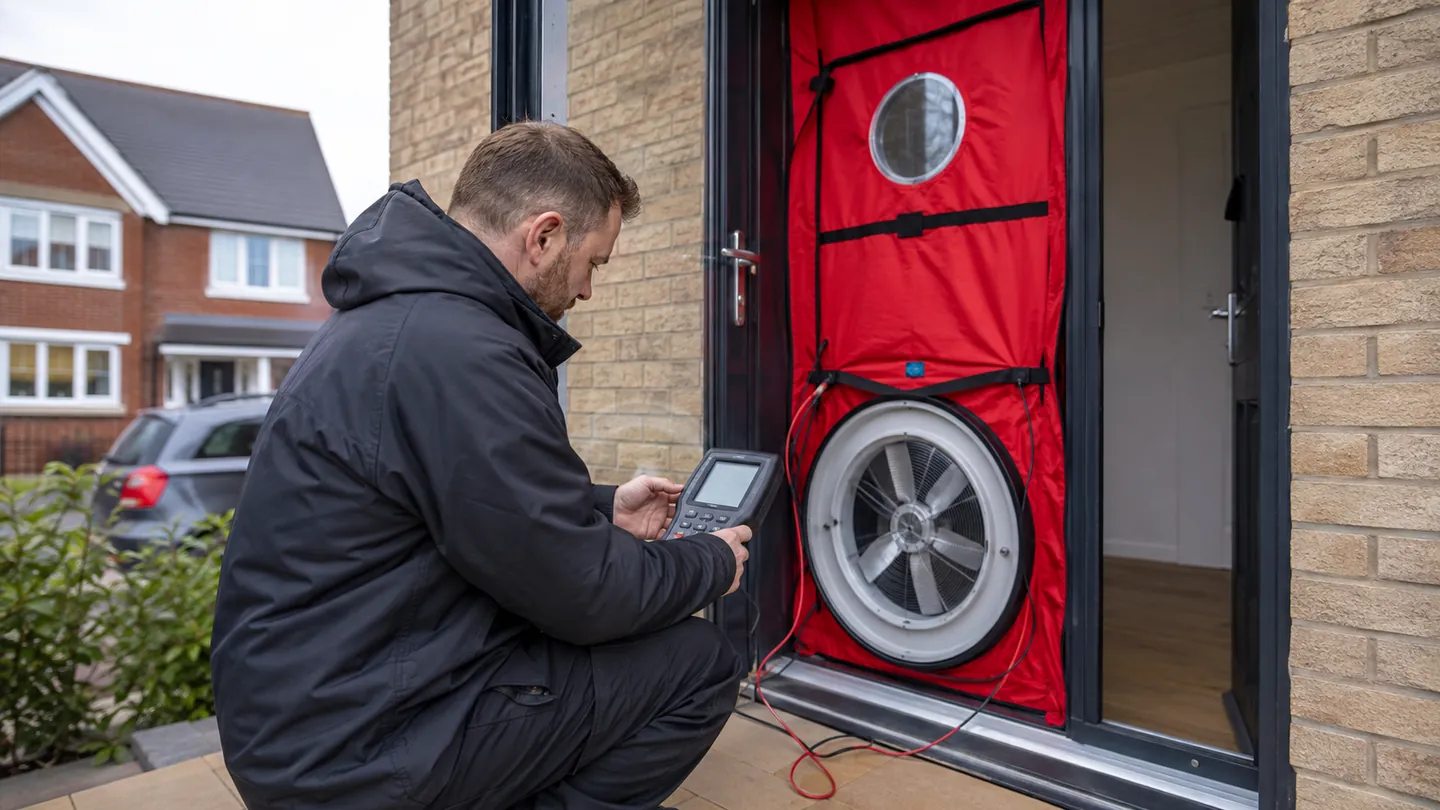
Air tightness testing measures uncontrolled leakage through the building envelope. The test result is important, but so is making sure the dwelling or building is at the correct completion stage and prepared consistently.
When this service is used
Used for Building Regulations, Part L compliance, completion evidence and projects where building-envelope performance must be verified.
What the report normally includes
- Air tightness test scope confirmation
- On-site test and result evidence
- Diagnostic advice where a test fails
- Completion-ready reporting
- Recommendations for remedial sealing if required
What we need from you
Providing the right information at the start helps us confirm the scope, quote accurately and avoid back-and-forth once the work is underway.
- Site address and access details
- Dwelling or building type
- Target air permeability if known
- Build stage and readiness
- Required completion date
A successful air test starts with building readiness
Useful to know before you enquire
Common questions
When should an air tightness test be booked?
Book early enough to secure the required completion date, but the building must be at the appropriate test-ready stage when the engineer attends.
What happens if the building fails?
We can discuss likely leakage paths and the practical remedial steps needed before a retest.
Does the air test affect SAP?
For new dwellings, the as-built air-permeability result can feed into the final energy-compliance calculation, so the two services should be coordinated.
Building-compliance project example
See how similar environmental constraints have been investigated, assessed and resolved on real projects.
Related services
These services are often reviewed alongside Air Tightness Testing depending on the site, planning context and proposed development.
Send the right information first time.
Our custom enquiry builder asks service-specific questions so we can confirm the correct scope, identify linked services and avoid unnecessary delays.
Build one enquiry for this and any related services.
Submit site information, planning references and supporting documents once. We’ll review the scope and confirm what is required.