


Skip to content
Environmental consultancy service

Coal Mining Risk Assessment

A Coal Mining Risk Assessment reviews coal mining legacy hazards and supports planning applications or condition discharge in Coal Authority risk areas.

Scope and evidence

Built around planning, development and compliance decisions.

Use this page to understand when the service is usually needed, what evidence is reviewed and what information helps us quote accurately.

  • Planning and regulator context
  • Clear deliverables and next steps
  • Linked services considered early

A Coal Mining Risk Assessment should move from regional mining records to the hazards that could actually affect the development footprint, then set out proportionate investigation or mitigation where the risk cannot be resolved at desk-study stage.

01

When this service is used

Used where a site is within or near a Coal Authority Development High Risk Area or where a local authority requests a coal mining assessment.

Planning and project supportCommonly required for development in coal-mining Development High Risk Areas or where the planning authority requests mining legacy evidence.
Risk and programme controlThe important question is not simply whether mining exists nearby, but whether mine entries, shallow workings, seams or other legacy features could affect the proposed development.
02

What the report normally includes

  • Coal mining hazard review
  • Coal Authority and historical data interpretation
  • Assessment of mine entries, shallow workings and subsidence risk
  • Risk rating and recommendations
  • Planning-ready report output
03

What we need from you

Providing the right information at the start helps us confirm the scope, quote accurately and avoid back-and-forth once the work is underway.

  • Site address and postcode
  • Planning reference
  • Site boundary plan
  • Coal Authority report if already obtained
  • Development description and layout
04

What the mining-risk evidence needs to establish
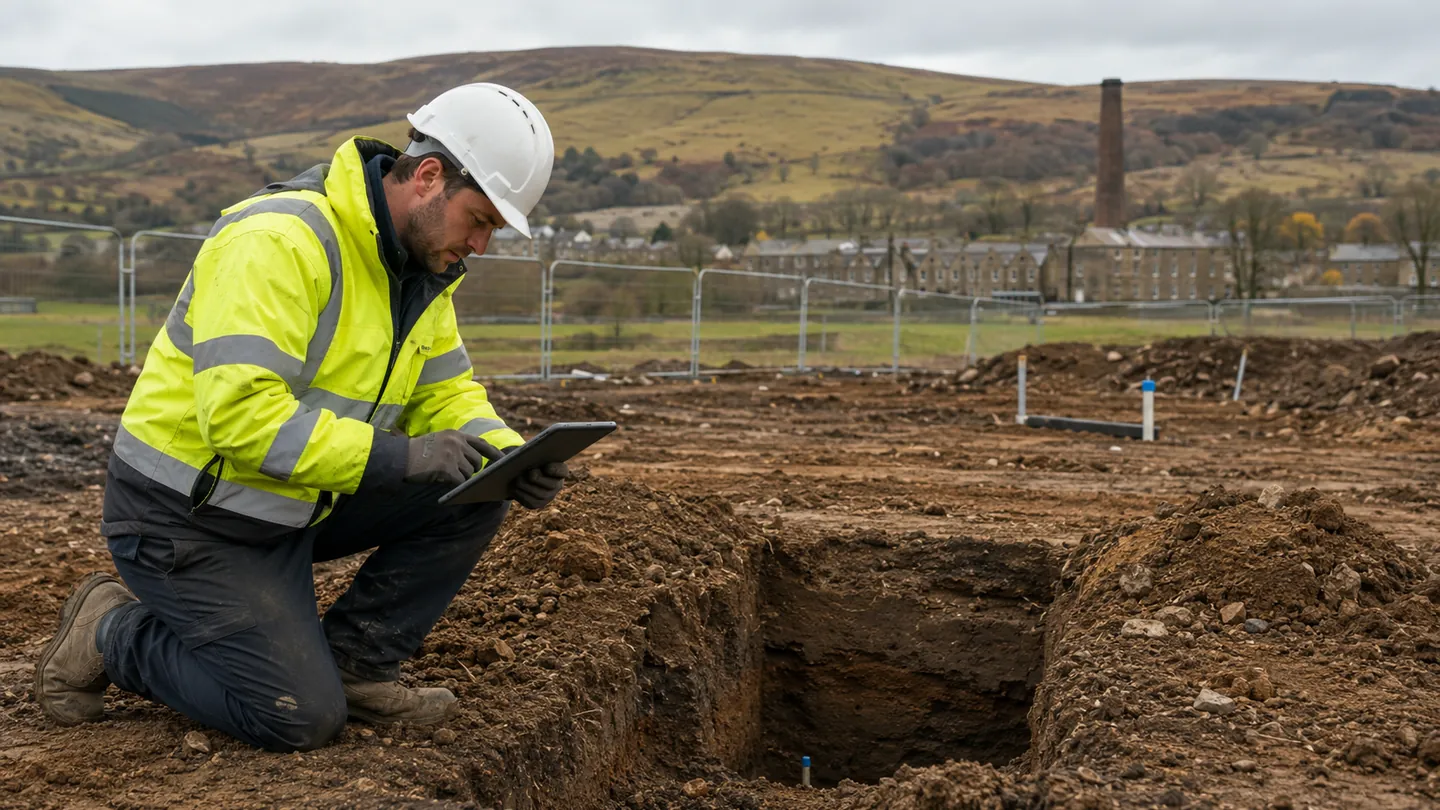
Ground investigation work supporting assessment of historic coal mining risk.
Ground investigation supporting the assessment of mining legacy and development risk.
What a robust scope should cover
  • Coal mining records, mine-entry information and relevant historical data
  • Potential shallow workings, seams and recorded or unrecorded mining features
  • Relationship between the proposed development and identified hazards
  • Ground stability and subsidence considerations
  • Need for intrusive investigation, drilling, treatment or design precautions
  • Clear recommendations suitable for the planning and design team
What the work should leave you with
  • A site-specific mining risk conclusion
  • Identified hazards mapped against the development proposal
  • A proportionate route to investigation or mitigation where required
  • Evidence that can support planning consultation and subsequent design decisions
Why the detail mattersA strong CMRA distinguishes between recorded mining information and a credible development hazard. That prevents generic mining data from becoming unnecessary investigation while still identifying risks that genuinely need treatment.See an EnviroSolution mining project →
05

Useful to know before you enquire

The red-line boundary and layout both matterA mine entry outside the site may still be relevant, while a recorded feature can have different implications depending on where buildings and infrastructure are proposed.
Desk assessment may not close every riskWhere shallow workings or uncertain mine features could affect the development, targeted drilling or other intrusive investigation may be recommended.
Treatment needs permission and designDrilling and grouting or other mining-remediation work is a separate stage and should be designed around the confirmed hazard.
Send any existing mining reportIf a Coal Authority report or previous investigation already exists, supplying it avoids duplicated data purchase and helps refine the scope.
FAQ

Common questions

Does being in a coalfield mean I need drilling?

Not automatically. The desk assessment first considers the available mining evidence and the development proposal. Intrusive work is recommended where a credible unresolved hazard remains.

What happens if shallow mine workings are identified?

The next step may include targeted investigation and, where confirmed, a treatment or foundation strategy. The route depends on depth, extent, development layout and the evidence available.

Can a CMRA support a planning application?

Yes. CMRAs are commonly prepared to support planning where coal-mining legacy is a material ground-stability consideration.

Next

Related services

These services are often reviewed alongside Coal Mining Risk Assessment depending on the site, planning context and proposed development.

Structured enquiry

Send the right information first time.

Our custom enquiry builder asks service-specific questions so we can confirm the correct scope, identify linked services and avoid unnecessary delays.

Add to enquiryView all services
Ready to send details?

Build one enquiry for this and any related services.

Submit site information, planning references and supporting documents once. We’ll review the scope and confirm what is required.

Add this service to enquiry