


Built around planning, development and compliance decisions.
Use this page to understand when the service is usually needed, what evidence is reviewed and what information helps us quote accurately.
- Planning and regulator context
- Clear deliverables and next steps
- Linked services considered early
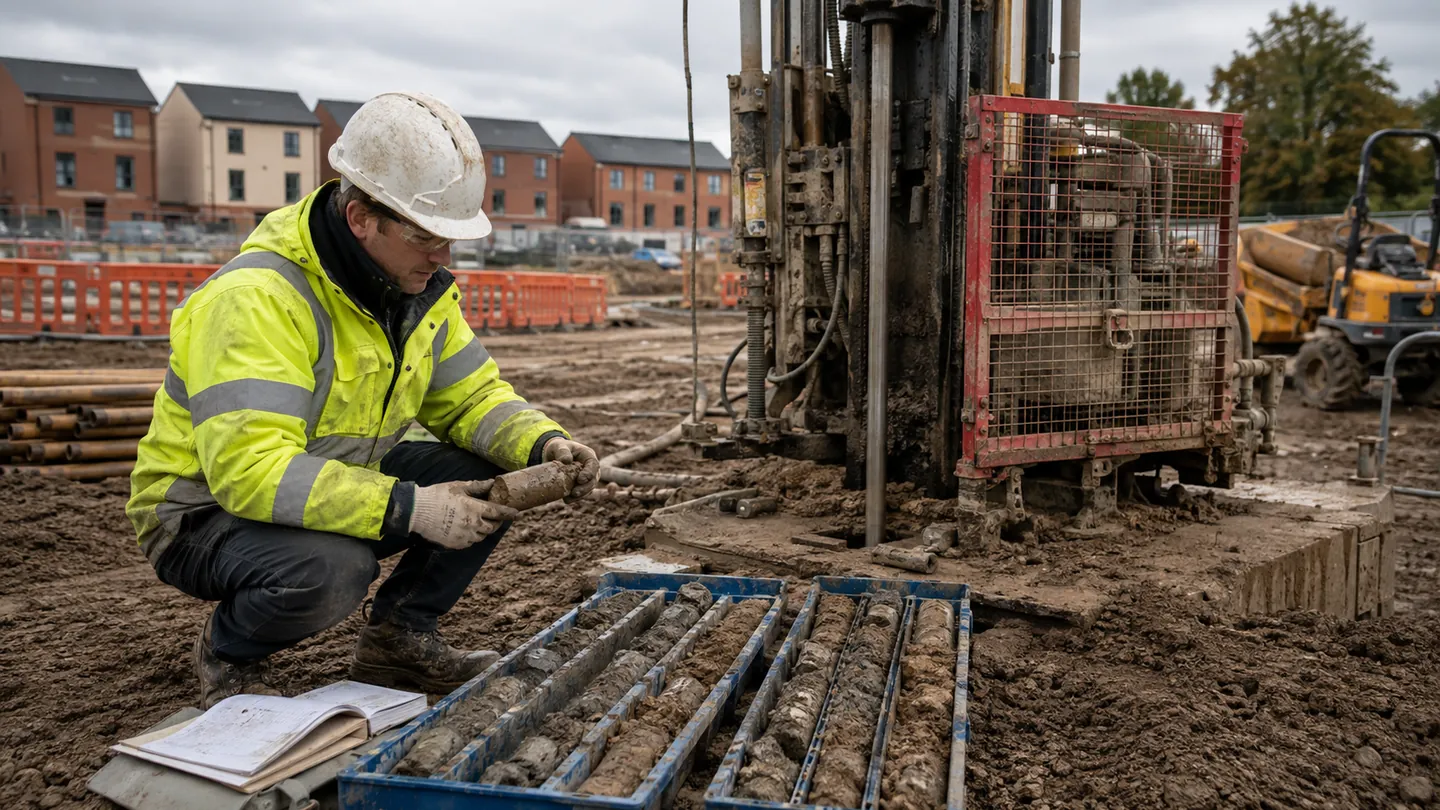
Geotechnical work is strongest when the investigation is designed around the proposed structures, earthworks and known geological hazards rather than applying a standard set of exploratory holes to every site.
When this service is used
Used for foundation design, mining legacy, slope stability, ground risk screening and development design where ground conditions need technical assessment.
What the report normally includes
- Ground risk and project scope review
- Available geology and mining context
- Development constraint commentary
- Recommendations for investigation or design input
- Clear reporting for designers and project teams
What we need from you
Providing the right information at the start helps us confirm the scope, quote accurately and avoid back-and-forth once the work is underway.
- Site address and boundary
- Proposed development layout
- Foundation or design questions if known
- Previous ground investigation reports
- Planning or warranty provider requirements
Ground investigation should collect the data the designer actually needs
Useful to know before you enquire
Common questions
What is the difference between geotechnical and contaminated-land investigation?
Geotechnical work focuses on engineering behaviour of the ground, while contaminated-land work focuses on environmental and health risks. They can often be investigated during the same site mobilisation with a coordinated scope.
Can you provide foundation recommendations?
Where the investigation and testing provide sufficient information, the interpretive report can give geotechnical recommendations and parameters for the design team.
Do you need the proposed layout before investigation?
It is highly beneficial. The location and type of proposed structures help target investigation points and depths to the decisions the engineer needs to make.
Geotechnical project examples
See how similar environmental constraints have been investigated, assessed and resolved on real projects.
Related services
These services are often reviewed alongside Geotechnical depending on the site, planning context and proposed development.
Send the right information first time.
Our custom enquiry builder asks service-specific questions so we can confirm the correct scope, identify linked services and avoid unnecessary delays.
Build one enquiry for this and any related services.
Submit site information, planning references and supporting documents once. We’ll review the scope and confirm what is required.