


Built around planning, development and compliance decisions.
Use this page to understand when the service is usually needed, what evidence is reviewed and what information helps us quote accurately.
- Planning and regulator context
- Clear deliverables and next steps
- Linked services considered early
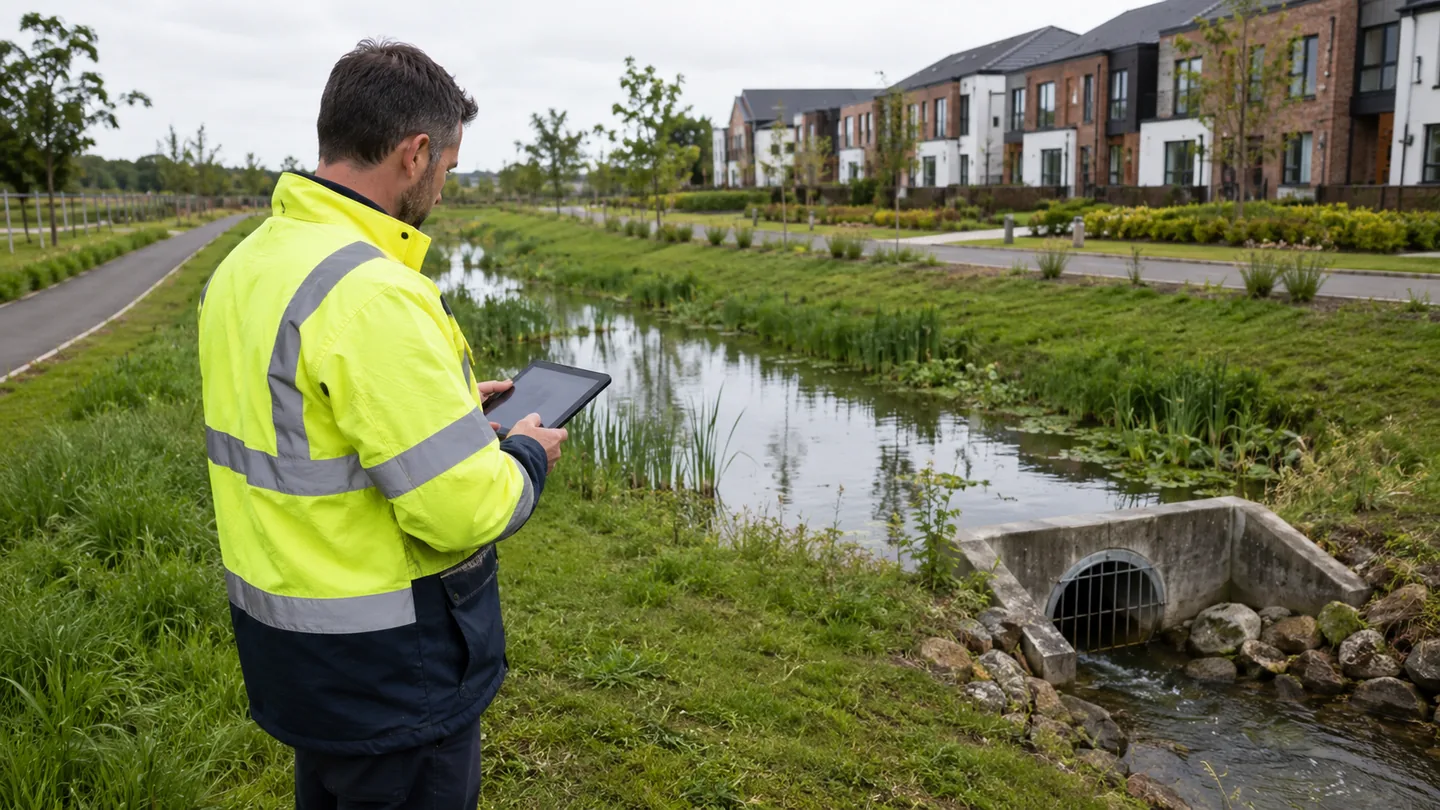
Surface-water design should respond to topography, ground conditions, discharge opportunities, flood pathways and the proposed development. The hierarchy and supporting evidence should be addressed before the drainage layout is fixed.
When this service is used
Used for planning applications, drainage strategies, flood risk screening, surface water design and condition discharge.
What the report normally includes
- Site drainage and planning context review
- Surface water management considerations
- Flood risk or SuDS constraint summary
- Recommendations for supporting calculations or testing
- Planning-focused report output where required
What we need from you
Providing the right information at the start helps us confirm the scope, quote accurately and avoid back-and-forth once the work is underway.
- Site address and red-line plan
- Development layout and impermeable area if known
- Drainage strategy or condition wording
- Topographical information where available
- Infiltration testing results if already completed
A drainage strategy needs to work with the site, not against it
Useful to know before you enquire
Common questions
Do I need infiltration testing for a drainage strategy?
Where infiltration is proposed, site-specific testing is often needed to demonstrate whether it is viable and provide a design rate. The requirement depends on the site and planning context.
What information is most useful at the start?
A red-line plan, proposed layout, topographical survey, drainage information, planning comments and any existing flood or infiltration reports are particularly useful.
What happens if infiltration is not viable?
The strategy can consider other routes in the surface-water hierarchy, typically attenuation and controlled discharge subject to the available outfall and approvals.
Related services
These services are often reviewed alongside SUDS, Drainage & Flood depending on the site, planning context and proposed development.
Send the right information first time.
Our custom enquiry builder asks service-specific questions so we can confirm the correct scope, identify linked services and avoid unnecessary delays.
Build one enquiry for this and any related services.
Submit site information, planning references and supporting documents once. We’ll review the scope and confirm what is required.