


Built around planning, development and compliance decisions.
Use this page to understand when the service is usually needed, what evidence is reviewed and what information helps us quote accurately.
- Planning and regulator context
- Clear deliverables and next steps
- Linked services considered early
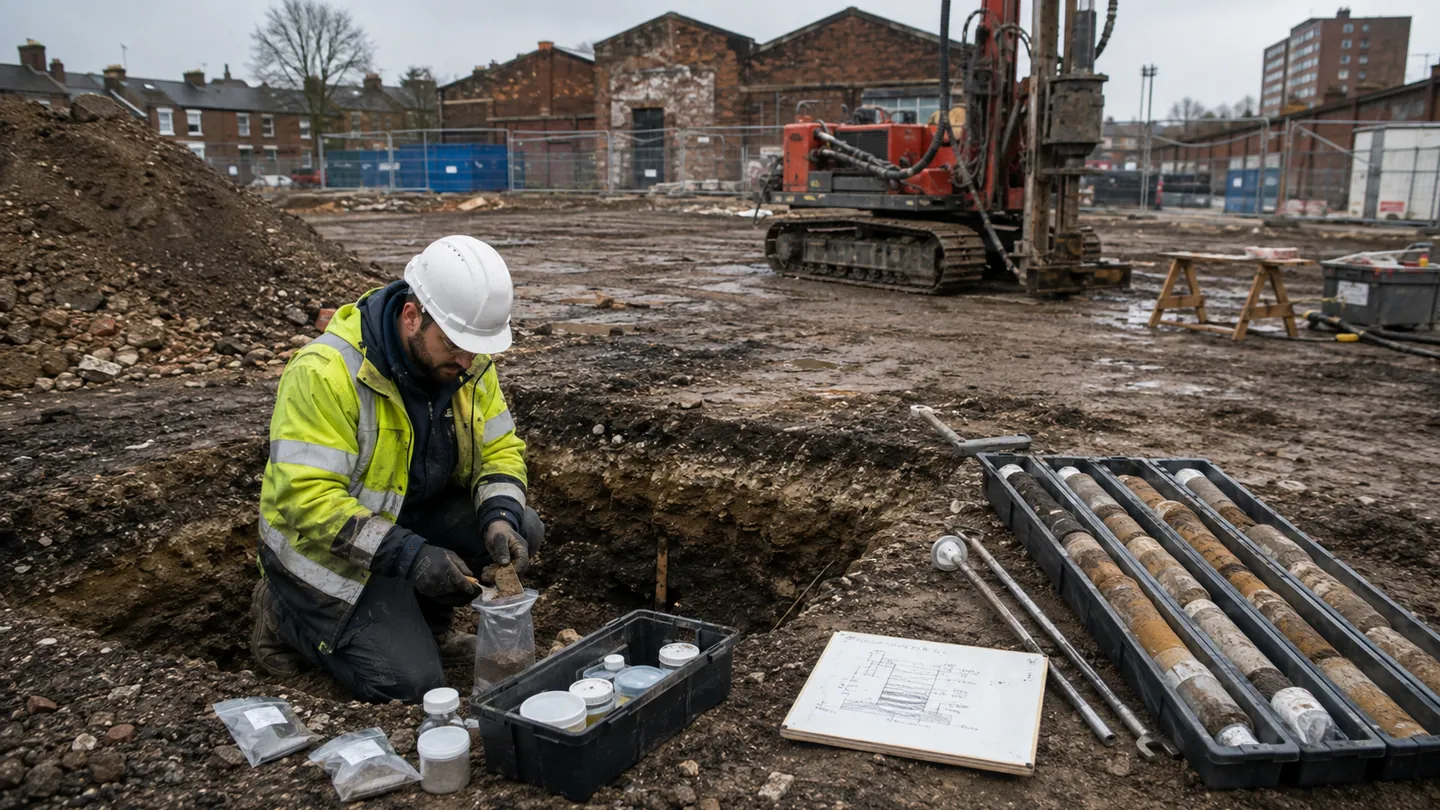
A Phase 2 Ground Investigation — also commonly described as a Phase II or intrusive site investigation — should convert the uncertainties identified at desktop stage into measured site evidence. The investigation strategy should be tied to the Conceptual Site Model, proposed development and planning or design decisions rather than treated as a generic drilling exercise.
When this service is used
Used to discharge contaminated-land planning conditions, investigate risks identified by a Phase 1 Desk Study or preliminary risk assessment, support land acquisition and due diligence, and provide measured ground data for remediation or development design.
What the report normally includes
- Review of the Phase 1, planning condition and Conceptual Site Model
- Site-specific intrusive investigation and sampling plan
- Trial pits, boreholes or other intrusive techniques as scoped
- Soil, groundwater and ground gas sampling or monitoring where required
- Accredited laboratory chemical testing and geotechnical testing where appropriate
- Interpretation of results and quantitative risk assessment where required
- Updated Conceptual Site Model with recommendations for remediation, further investigation, monitoring or design
What we need from you
Providing the right information at the start helps us confirm the scope, quote accurately and avoid back-and-forth once the work is underway.
- Site address and red-line boundary plan
- Phase 1 Desk Study and previous reports where available
- Planning condition wording or regulator comments
- Proposed development layout and current site use
- Access constraints and buried-services information
- Investigation deadline and any monitoring or design requirements
Phase 2 Ground Investigation and intrusive site investigation: what it should prove
Useful to know before you enquire
Common questions
Is a Phase 2 Ground Investigation the same as an intrusive site investigation?
Phase 2 is commonly used to describe the intrusive investigation stage that follows a desk-based preliminary assessment. Depending on the project it can include trial pits, boreholes, soil and groundwater sampling, gas monitoring, laboratory testing and risk assessment.
Do I need a Phase 1 before Phase 2?
Usually, yes. The Phase 1, planning condition or other preliminary risk assessment should identify the potential pollutant linkages and uncertainties so the intrusive investigation can be targeted rather than generic.
What investigation techniques might be used?
The method depends on access, geology, target depth and the risks being investigated. Typical techniques include trial pits, window sampling, cable percussion or rotary boreholes and in-situ testing.
Can Phase 2 help discharge a contaminated-land planning condition?
Yes, where the condition requires intrusive evidence. Whether it is sufficient for discharge depends on the condition wording, the findings and whether remediation, further investigation or verification is still required.
Phase 2 ground investigation and planning guidance
These supporting resources explain when intrusive investigation is triggered, how to scope it and how the results support planning decisions. Use this service page when you need a Phase 2 quote.
Phase 2 investigation examples
See how similar environmental constraints have been investigated, assessed and resolved on real projects.
Related services
These services are often reviewed alongside Phase 2 Ground Investigation depending on the site, planning context and proposed development.
Send the right information first time.
Our custom enquiry builder asks service-specific questions so we can confirm the correct scope, identify linked services and avoid unnecessary delays.
Build one enquiry for this and any related services.
Submit site information, planning references and supporting documents once. We’ll review the scope and confirm what is required.