


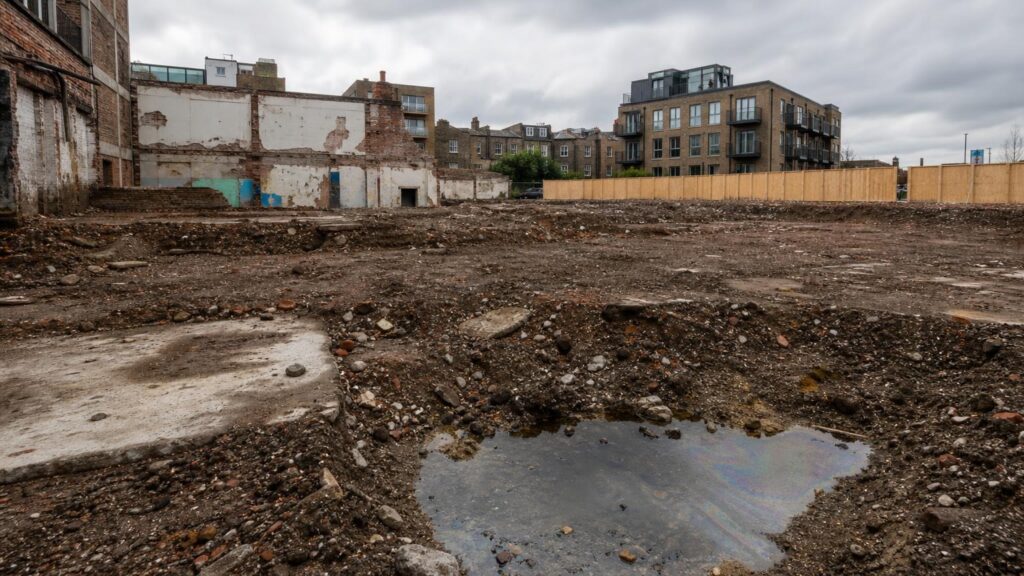
Across the UK, change-of-use projects are a major driver of development—particularly office-to-residential, retail-to-residential, and mixed-use conversions. These schemes can look straightforward on paper, but the environmental risk profile often changes dramatically once the end use becomes more sensitive.
That is why a Phase 1 Desktop Study is frequently required. A Phase 1 Desktop Study establishes whether historic land uses could create contamination risks for future occupants, construction workers, buildings, or controlled waters. Even if the building looks clean today, historic activities on-site or nearby can still matter: former fuel storage, workshop areas, chemical stores, and made ground can all create risk.
Why conversions attract higher scrutiny
The key issue is receptors. When you convert commercial space to residential, you introduce vulnerable receptors (residents and children) and different exposure pathways (gardens, landscaping, deeper services trenches, or new openings that could affect vapour ingress). Planners and environmental health teams often require a Phase 1 Desktop Study to demonstrate that risk has been considered properly before a more sensitive use is introduced.
Common UK examples where Phase 1 is essential
- Former offices with unknown service routes and made ground
- Retail units with historic basement storage or old tanks
- Workshops or light industrial units being converted to flats
- Historic town-centre plots with long, mixed-use histories
- Sites near rail corridors, depots, or historic yards
How a Phase 1 Desktop Study helps you make better design decisions
A good Phase 1 Desktop Study does not just tick a box. It informs design and reduces downstream cost. If the assessment identifies potential hydrocarbon risk, you can consider groundworks strategy and validation early. If the site is near sensitive water receptors, you can plan drainage design and infiltration suitability accordingly. If ground gas is plausible, you can budget for monitoring or protective measures without last-minute redesign.
Planning conditions vs. planning refusal
In many cases, planners will condition further work rather than refuse outright. However, conditions still carry programme risk. A clear Phase 1 Desktop Study can help frame conditions in a proportionate way, preventing overly broad requirements that are difficult to discharge. It can also reduce the chances of repeated “further information” loops during validation.
If you are planning a conversion or change of use, start with a compliant Phase 1 Desktop Study. EnviroSolution provides clear, planning-ready reports that support swift decision-making.
Get your Phase 1 Desktop Study here: Phase 1 Desktop Study. A small upfront step can save weeks later.
Make your conversion smoother
Conversions often move fast, with tight design programmes. The Phase 1 Desktop Study is a quick win: it gives planners confidence that environmental risk has been considered, and it gives your team early visibility of constraints that could affect gardens, groundworks, or building fabric. If any additional work is required, you can schedule it without derailing the wider project timeline.
If you’re planning a change of use, start with the Phase 1 Desktop Study and keep your planning pathway clean and predictable.
What you’ll receive from EnviroSolution
EnviroSolution’s Phase 1 Desktop Study is written for real-world planning decisions: clear structure, clear risk logic, and clear recommendations. We include the key evidence planners expect—site history, environmental context, a conceptual site model, and a reasoned risk conclusion—so your submission is easier to review and less likely to trigger follow-up queries. That saves time at validation and reduces the risk of conditions being over-scoped.