


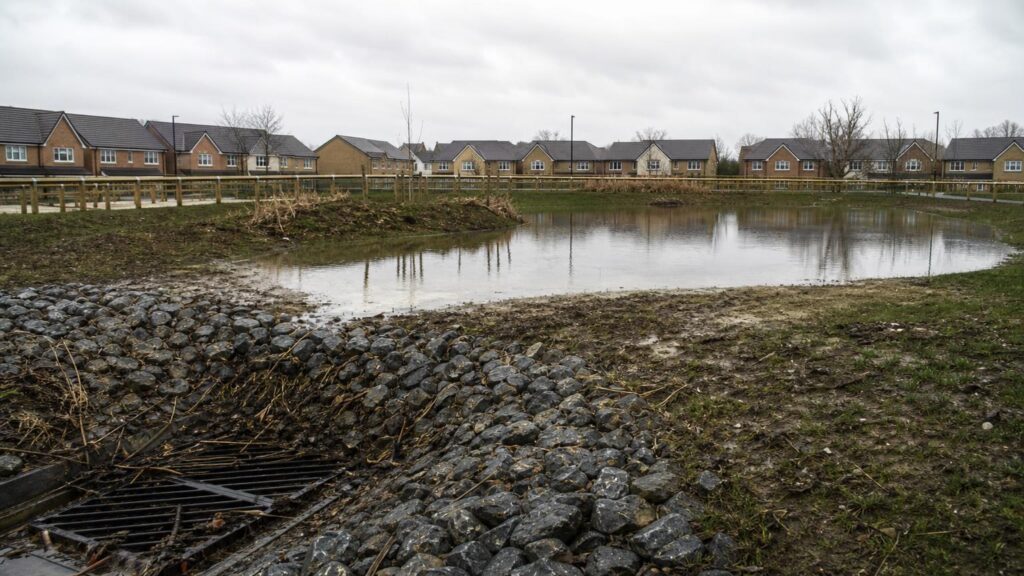
Flood risk and sustainable drainage (SuDS) are now central considerations in UK planning. Even where a site is not in a high flood zone, drainage design and infiltration proposals can trigger environmental scrutiny—particularly if there is a possibility of contamination in soil or shallow groundwater.
This is a key reason why a Phase 1 Desktop Study is so valuable. A Phase 1 Desktop Study assesses contamination risk and identifies whether there are potential constraints on infiltration (soakaways, infiltration basins, permeable paving) due to historic land use or hydrogeological sensitivity. In many planning pathways, that early clarity can prevent wasted design work and avoid late-stage objections.
Why infiltration and contamination are linked
SuDS infiltration involves directing clean surface water into the ground. If the ground contains contaminants, infiltration can mobilise pollutants and increase risks to controlled waters. Likewise, if the site is near groundwater abstraction points or sensitive water bodies, planners may expect higher confidence that infiltration will not cause harm. A robust Phase 1 Desktop Study highlights these constraints early and recommends proportionate next steps, such as infiltration testing or additional assessment where appropriate.
Common UK situations where this becomes critical
- Redevelopment of former industrial land where infiltration is proposed to meet drainage policy
- Sites near rivers, streams, canals, or wetlands where pathways to controlled waters are plausible
- Town-centre sites with made ground or historical fill
- Former garages and workshops where hydrocarbons may be present in shallow soils
- Areas with shallow groundwater or sensitive aquifers
How a Phase 1 Desktop Study supports drainage strategy
When a drainage engineer asks, “Can we infiltrate here?”, a Phase 1 Desktop Study provides the first evidence-based answer. It reviews historic maps and environmental records for indicators of contamination, identifies hydrogeological setting, and flags controlled waters sensitivity. It then translates that information into practical guidance: is infiltration likely to be acceptable, or should you consider alternative drainage approaches?
This can save time. If the Phase 1 Desktop Study suggests infiltration may be constrained, you can pivot early to attenuation and discharge strategies rather than redesign late in the process. If infiltration appears feasible, the Phase 1 Desktop Study provides a defensible basis for progressing to the next stage of design.
Planning confidence and condition discharge
Drainage conditions and contaminated land conditions often interact. A clear Phase 1 Desktop Study helps planners set proportionate conditions and helps your team discharge them efficiently. That reduces the risk of pre-commencement delays that can disrupt programmes and contractor mobilisation.
If your project involves SuDS or infiltration, start with a planning-ready Phase 1 Desktop Study. EnviroSolution’s reports are designed to be clear, defensible, and aligned with UK planning expectations.
Order your Phase 1 Desktop Study here: Phase 1 Desktop Study.
Keep drainage and contamination aligned
When drainage design runs ahead of contamination due diligence, teams often end up redesigning late. The Phase 1 Desktop Study prevents that by giving an early, evidence-based view of whether infiltration is likely to be acceptable. That helps you select the right SuDS approach, set realistic expectations with planners, and avoid wasted design time. If infiltration is feasible, the Phase 1 Desktop Study provides the context to support it; if it isn’t, it gives a defensible reason to use alternative strategies.
Start with the Phase 1 Desktop Study so drainage and environmental risk move together—not against each other.