


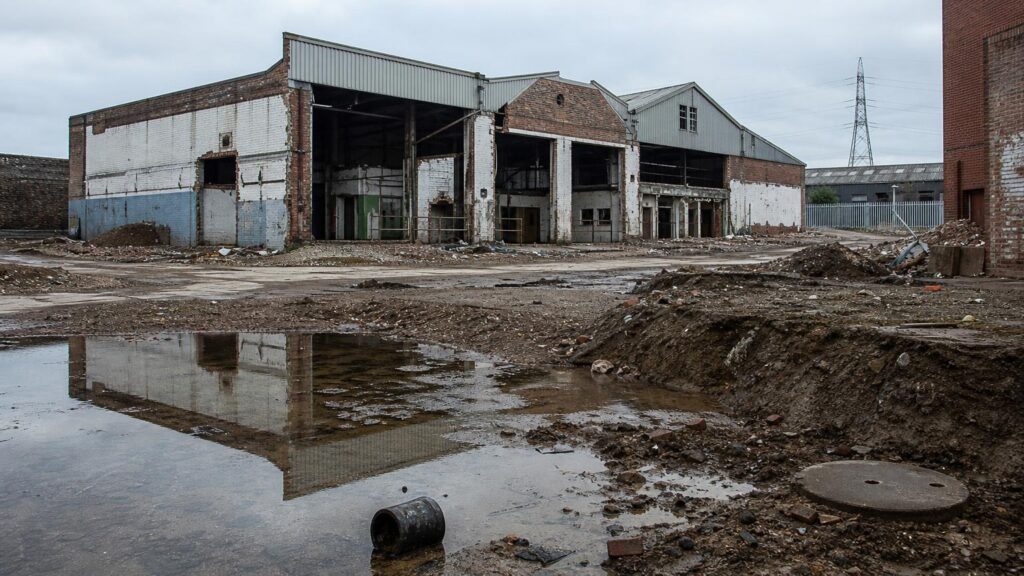
The UK market is seeing strong demand for redevelopment and refurbishment of existing buildings—particularly where demolition is costly or where embodied carbon targets are a priority. However, redevelopment isn’t just about what is inside the building; it is also about what is under and around it.
That is why a Phase 1 Desktop Study is a smart early step. A Phase 1 Desktop Study reviews historic land use, environmental setting, and potential contamination sources to identify risks that could affect refurbishment, groundworks, services, landscaping, or future occupants. For many refurb-and-repurpose schemes, it is one of the fastest ways to prevent hidden constraints from undermining the programme.
Why “existing building” does not mean “low risk”
It is common for a site to have had multiple uses over decades: storage, workshops, fuel areas, small-scale industrial processes, or waste handling. Even if the current use is benign, historic activity can still leave contamination in shallow soils or made ground. Refurbishment schemes frequently introduce new pathways—new penetrations, service trenches, landscaping, or altered ventilation—that can change exposure routes.
A Phase 1 Desktop Study helps you understand those risks early, rather than discovering them when contractors are on site.
Refurbishment and change-of-use: typical UK triggers
- Warehouse or office conversion to residential or mixed use
- Redevelopment of older retail units with historic storage areas
- Small industrial buildings repurposed for commercial or community uses
- Town-centre refurb projects with complex historic mapping records
How a Phase 1 Desktop Study supports cost certainty
Cost certainty is the difference between a viable refurb and a stalled project. A strong Phase 1 Desktop Study identifies likely abnormal costs early: additional investigation, ground gas assessment, targeted remediation, or specialist materials management. If risk is low, the Phase 1 Desktop Study provides evidence to prevent unnecessary intrusive work. If risk is plausible, you can plan and price it properly.
Planning compliance and pre-commencement conditions
Many refurb projects still attract contaminated land conditions—especially where end use becomes more sensitive. A clear Phase 1 Desktop Study helps ensure conditions are proportionate and dischargeable. It also reduces the risk of repeated requests for additional information during planning validation.
If you are refurbishing, repurposing, or converting an existing building, start with a compliant Phase 1 Desktop Study. EnviroSolution produces clear, planning-ready reports that support smooth approvals and practical decision-making.
Order your Phase 1 Desktop Study here: Phase 1 Desktop Study.
Plan refurbishment works with confidence
Refurb projects often include “small” groundworks that still matter: new service runs, drainage upgrades, external works, landscaping, or new foundations for extensions. The Phase 1 Desktop Study helps you understand whether those works could encounter contaminated made ground, hydrocarbons, or ground gas. If risks are identified, you can specify controls and investigation at the right time—before contractors are on site and before costs escalate.
Start with the Phase 1 Desktop Study and keep refurb programmes stable.
What you’ll receive from EnviroSolution
EnviroSolution’s Phase 1 Desktop Study is written for real-world planning decisions: clear structure, clear risk logic, and clear recommendations. We include the key evidence planners expect—site history, environmental context, a conceptual site model, and a reasoned risk conclusion—so your submission is easier to review and less likely to trigger follow-up queries. That saves time at validation and reduces the risk of conditions being over-scoped.