


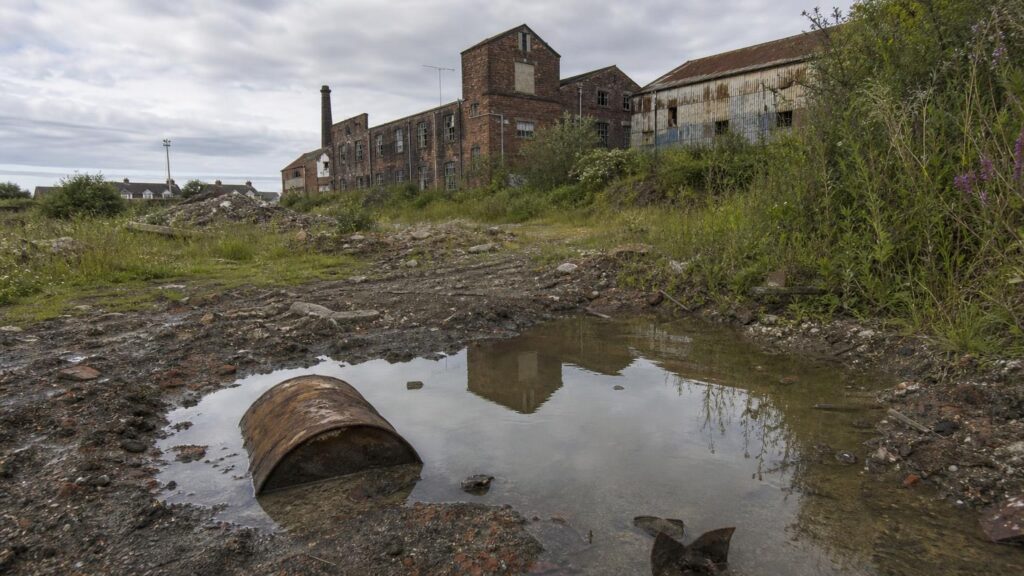
Across the UK, “unknown ground” remains one of the biggest causes of development risk. Even with good design, programmes can be derailed by late discovery of contamination, made ground, ground gas, or groundwater constraints. The fastest way to reduce that uncertainty is to start with a Phase 1 Desktop Study.
A Phase 1 Desktop Study is an evidence-based desktop contaminated land assessment. It uses historical mapping, environmental databases, geological context, and site reconnaissance to identify potential sources of contamination and evaluate how they could affect receptors. In practical terms, it turns uncertainty into a structured, manageable risk picture.
Why “unknown ground” is getting more attention
UK planners and funders are increasingly risk-aware. Sites are being developed more intensively, with tighter margins, and often on land that has been previously used. At the same time, procurement and construction programmes have little tolerance for surprises. When contamination or ground gas is discovered late, it can lead to redesign, extended investigations, validation sampling, and unplanned remediation—costs that can quickly exceed the price of doing things properly at the start.
What a Phase 1 Desktop Study can reveal early
A planning-ready Phase 1 Desktop Study can reveal:
- Historic uses such as workshops, fuel storage, or industrial processes
- Nearby potential sources that could impact the site (for example rail yards or landfills)
- Made ground indicators and potential ground gas risk
- Controlled waters sensitivity and hydrogeological constraints
- Whether further investigation is likely to be required
How it helps you scope investigations correctly
If further work is required, the Phase 1 Desktop Study is the foundation for a proportionate Phase 2 intrusive investigation. Instead of drilling “just in case”, you can target sampling to credible risks. That improves budget control and avoids over-scoping. Conversely, if the Phase 1 Desktop Study supports a low-risk conclusion, it can justify a lighter-touch approach and reduce unnecessary spend.
Why repeatability and clarity matter for planners
Contaminated land officers and planning caseworkers want clarity: what was reviewed, what was found, what is the risk, and what is recommended. A strong Phase 1 Desktop Study makes their job easier, which often translates into faster decisions and fewer queries. Clear conclusions and a defensible conceptual site model reduce the likelihood of “further information” loops.
If you want to reduce “unknown ground” risk on your next UK scheme, commission a compliant Phase 1 Desktop Study early. EnviroSolution provides fixed-fee, planning-ready desktop studies that keep projects moving.
Order your Phase 1 Desktop Study here: Phase 1 Desktop Study.
Use Phase 1 as a decision tool
The best way to think about the Phase 1 Desktop Study is as a decision tool: it tells you what matters, what probably doesn’t, and what to do next. That improves decision-making across the project team—from acquisition and planning through to procurement and construction. When everyone is working from a clear conceptual site model, you reduce miscommunication and avoid unnecessary scope creep.
If you want a clean, defensible starting point, commission the Phase 1 Desktop Study early and keep risk under control.