


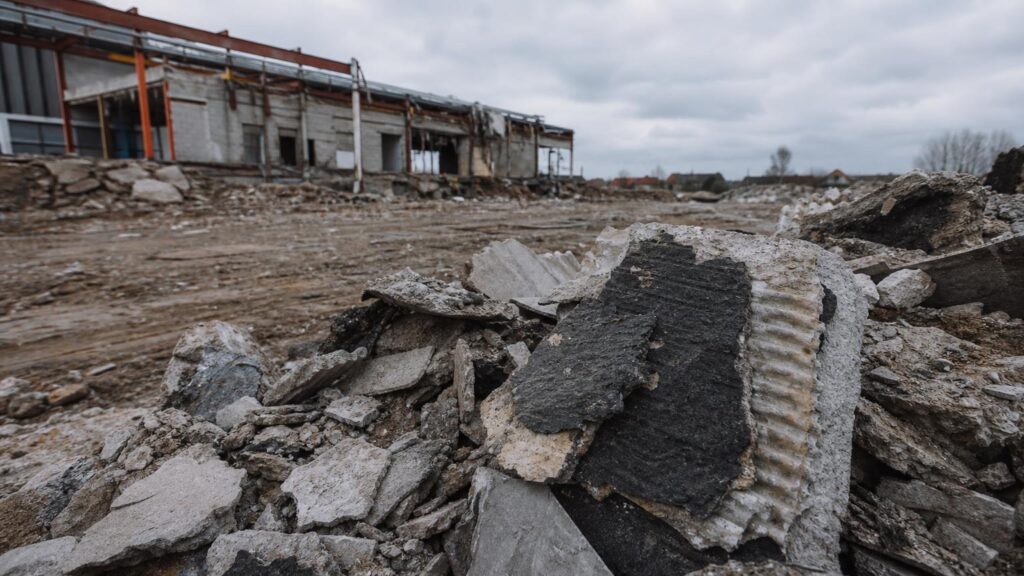
One of the most common “silent risks” on UK sites is asbestos-containing materials (ACMs) and asbestos-contaminated made ground. While asbestos surveys are essential for buildings, land contamination risks can also exist—particularly where demolition, refurbishment, or historic industrial activity is involved.
This is another strong reason to commission a Phase 1 Desktop Study. A Phase 1 Desktop Study reviews historical land use and environmental context to identify whether asbestos is a plausible contaminant within soils or made ground, and whether there are associated pathways that could affect construction workers, future residents, or the public.
How asbestos becomes a land contamination issue
Asbestos risk in soils can arise from historic demolition material used as fill, industrial processes, or waste disposal practices that were common decades ago. If made ground is present, there is a higher chance of encountering mixed fragments that can include ACMs. During groundworks, dust generation and material handling can create exposure pathways if asbestos is present.
Where UK projects commonly encounter this risk
- Redevelopment of older industrial plots with historic demolition and fill
- Town-centre regeneration where multiple buildings have been demolished over time
- Sites with historic waste handling, depots, or storage yards
- Refurbishment schemes involving breaking out slabs, service trenches, or landscaping
What a Phase 1 Desktop Study can do (and what it cannot)
A Phase 1 Desktop Study does not replace a building asbestos survey and it does not “test” soils. What it does do is provide an evidence-based view of plausibility and risk. It reviews historic maps, records, and site context to determine whether asbestos in soil or made ground is credible and whether pathways exist. If so, the Phase 1 Desktop Study will recommend proportionate next steps—typically targeted intrusive investigation or materials assessment during groundworks planning.
Why this matters for programme and contractor planning
If asbestos risk is identified late, it can lead to site stoppages, additional controls, reclassification of waste, and cost escalation. Identifying plausibility early via a Phase 1 Desktop Study allows you to plan the right investigations and controls into your programme and procurement strategy. That reduces the chance of surprises after mobilisation.
If your project involves demolition, redevelopment, or ground disturbance on an older UK site, a compliant Phase 1 Desktop Study is a practical first step. EnviroSolution’s reports are designed for planning compliance and real-world buildability.
Order your Phase 1 Desktop Study here: Phase 1 Desktop Study.
Manage construction risk proactively
Construction teams need to know what they might encounter in the ground, because it affects method statements, waste classification, and health and safety controls. The Phase 1 Desktop Study provides an early warning system: if asbestos in made ground is plausible, you can plan targeted investigation and appropriate controls rather than reacting mid-build. That reduces the likelihood of site stoppages and unexpected disposal costs.
Commission the Phase 1 Desktop Study early so you can plan safely and keep the project moving.
What you’ll receive from EnviroSolution
EnviroSolution’s Phase 1 Desktop Study is written for real-world planning decisions: clear structure, clear risk logic, and clear recommendations. We include the key evidence planners expect—site history, environmental context, a conceptual site model, and a reasoned risk conclusion—so your submission is easier to review and less likely to trigger follow-up queries. That saves time at validation and reduces the risk of conditions being over-scoped.