


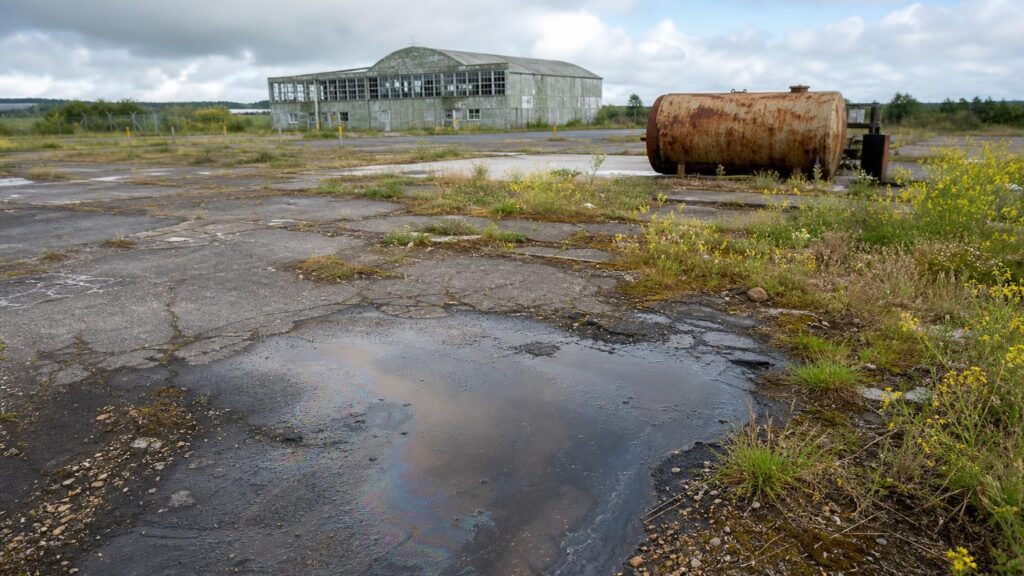
Across the UK, developers are increasingly facing questions about emerging contaminants and how they fit within contaminated land risk assessment. While many projects still focus on traditional contaminants (hydrocarbons, metals, solvents, asbestos), there is growing awareness of newer chemical groups, changing industrial legacies, and tighter environmental expectations.
The practical approach is to start with a robust Phase 1 Desktop Study. A Phase 1 Desktop Study provides the structured framework needed to evaluate what is plausible for a given site based on history and context—without making assumptions or over-scoping. It identifies credible sources, pathways, and receptors, and it sets out proportionate recommendations for next steps.
Why “emerging contaminants” matter in UK development
Different historic uses can introduce different risk profiles. Fire training areas, certain manufacturing activities, waste handling, or sites with extensive imported fill may present a broader range of potential contaminants than a simple residential plot. In parallel, controlled waters protection remains a key planning consideration, particularly near sensitive aquifers, rivers, and wetlands.
A Phase 1 Desktop Study helps you align your investigation scope with credible site-specific risks. That protects budgets and ensures your due diligence is defensible if questions arise later.
How a Phase 1 Desktop Study keeps your scope proportionate
One of the biggest mistakes on complex sites is either:
- Doing too little—missing plausible risks and triggering late redesign or enforcement concerns; or
- Doing too much—over-testing and inflating costs without a clear justification.
A strong Phase 1 Desktop Study reduces both risks. It creates a reasoned justification for what should be investigated and why. That is valuable for planners, funders, and project teams because it demonstrates structured decision-making.
Planning, programme, and stakeholder clarity
Planning officers want clarity, and so do your internal stakeholders. A Phase 1 Desktop Study provides a clear narrative: what the historic sources are, what pathways exist, what receptors may be affected, and what the risk conclusion is. If the conclusion is “further investigation required,” it should be clearly scoped so that a Phase 2 investigation can be commissioned efficiently and reviewed quickly.
Start with the fundamentals
Even as environmental expectations evolve, the process remains consistent: establish site history and setting, develop a conceptual site model, assess risks, then commission proportionate further work where necessary. The Phase 1 Desktop Study is the foundation that makes that process credible and efficient.
If you want a planning-ready report that helps you manage both classic and site-specific risks, start with EnviroSolution’s Phase 1 Desktop Study service.
Order your Phase 1 Desktop Study here: Phase 1 Desktop Study.
Keep your approach evidence-led
Emerging contaminants can be a concern on certain historic land uses, but the right approach is always evidence-led and proportionate. The Phase 1 Desktop Study helps you identify what is plausible for your specific site and avoid unnecessary testing that inflates costs. Where additional assessment is justified, the Phase 1 Desktop Study provides the rationale planners and stakeholders need to see, keeping the process transparent and defensible.
Start with the Phase 1 Desktop Study and keep environmental risk management practical and controlled.