


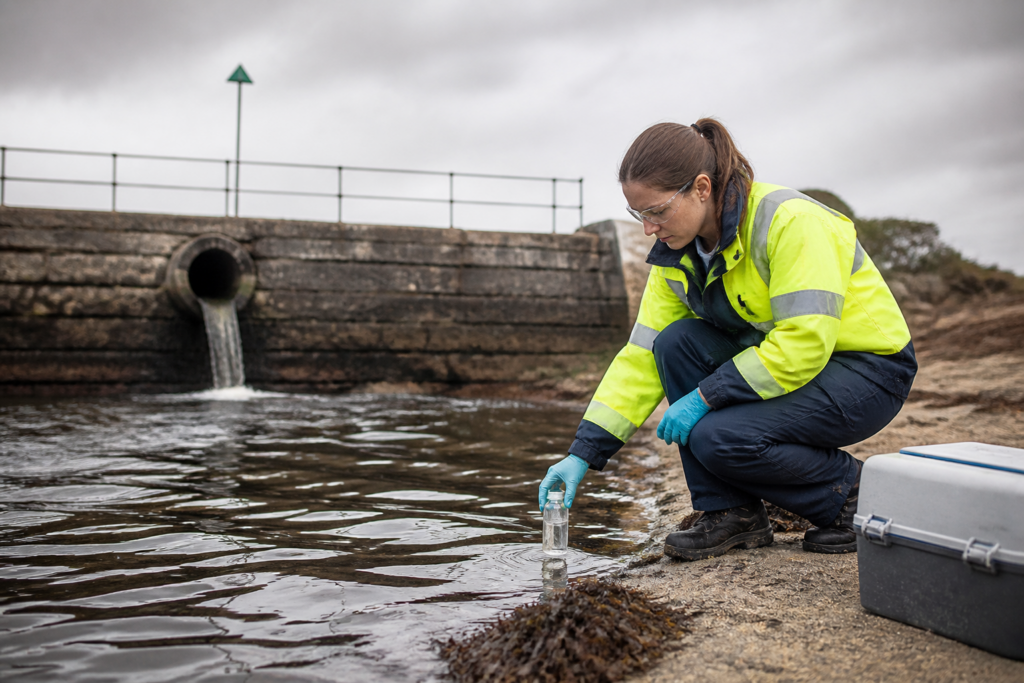
United Utilities Water Limited has been fined £900,000 following sewage discharges affecting the Fylde Coast in Lancashire during June 2023. With costs included, the amount ordered at Preston Magistrates’ Court on 8 September 2026 was £964,225.
The company pleaded guilty to five offences involving breaches of environmental permit conditions. The prosecution followed an Environment Agency investigation into discharges from the Manchester Square, Anchorsholme and Chatsworth Avenue pumping stations between 11 and 22 June 2023.
For environmental managers, infrastructure owners and developers, the outcome is a significant reminder that a major asset failure does not itself determine regulatory liability. Regulators will examine whether discharges complied with the precise limits and triggers in the relevant permit, as well as how the operator identified, controlled and evidenced the incident response.
What happened on the Fylde Coast?
The incident began after a partial collapse of a final-effluent pipe at Fleetwood Wastewater Treatment Works. The failure restricted the works’ ability to pass treated flows onwards, causing wastewater to back up through the treatment works and connected sewerage network.
Over several days, raw sewage was discharged into the Irish Sea from three pumping stations for more than 35 hours in total. The Environment Agency said that monitoring and testing undertaken during the episode indicated the presence of E. coli, and precautionary no-bathing advice was issued across the eight designated bathing waters potentially affected.
Contemporary advice issued by Fylde Council in June 2023 asked people not to swim or bathe at St Annes and St Annes North, while neighbouring authorities issued equivalent warnings for beaches including Blackpool, Cleveleys and Fleetwood. It also advised that animals should be kept out of the water.
United Utilities installed a two-kilometre temporary bypass, deployed additional pumping equipment and used tankers to transfer wastewater to other treatment works. The damaged pipe was repaired and Fleetwood returned to full service. The company has said that it has since undertaken further resilience work on the Fylde Coast network.
Why the environmental permits were central
The case was not simply about whether an emergency discharge occurred. It turned on whether the pumping-station discharges met the conditions written into United Utilities’ environmental permits.
The Environment Agency said the permits allowed discharges only once flows arriving at Fleetwood Wastewater Treatment Works had reached 2,300 litres per second, alongside seasonal conditions. Its analysis of flow and spill data supplied by the company concluded that the relevant threshold had not been reached when the spills occurred.
United Utilities admitted the breaches during an interview under caution in November 2024, pleaded guilty on 22 April 2026 and was sentenced on 8 September 2026. The regulator classified the pollution event as a Category 1 incident, the highest category in its incident classification system. It also submitted that the offending amounted to reckless culpability and Harm Category 1 for sentencing purposes.
The practical distinction matters: an environmental permit may allow certain emergency or storm-related discharges in defined circumstances, but this does not create a general permission to discharge whenever a network is under pressure. The applicable permit wording, operating conditions, data records and decision trail remain critical.
Implications for operators and asset owners
The fine is a clear prompt for organisations operating wastewater, drainage, pumping or effluent infrastructure to test whether their arrangements would withstand both an operational failure and subsequent regulatory scrutiny.
- Understand permit triggers: Site teams, control-room staff and contractors should be able to identify the precise thresholds, seasonal restrictions and monitoring requirements that govern each authorised discharge point.
- Treat telemetry and event data as evidence: Flow, level, rainfall, pump-status and spill-duration records should be quality-assured, time-synchronised and retained in a form that can explain operational decisions.
- Assess single points of failure: Buried pipelines, final-effluent routes, pumping capacity and power supplies may constrain an entire catchment. Asset-criticality assessments should consider the consequences of losing each component, not only its likelihood of failure.
- Plan credible contingencies: Bypass pumping, temporary pipework, tankering, storage and alternative treatment capacity should be assessed in advance. Arrangements need to be realistic for the access, safety and environmental constraints of the location.
- Exercise incident communications: Coastal and public-facing incidents may require rapid coordination with regulators, local authorities, public-health partners, businesses and affected communities.
Considerations for developers and connected sites
Developers and industrial operators are not responsible for a water company’s permit compliance. However, those planning major schemes, trade-effluent connections or drainage changes should recognise the importance of local wastewater-network capacity and resilience.
Early engagement with the relevant sewerage undertaker remains sensible where a project could add significant foul flows, alter runoff patterns or depend on pumping infrastructure. Environmental due diligence should consider available connection capacity, the location of critical downstream assets, emergency-storage arrangements and the scope for construction or operational activity to increase pressure on constrained systems.
For operators with their own environmental permits, the wider lesson is equally relevant: a failure investigation should not stop at the technical root cause. It should also test the adequacy of inspection regimes, condition monitoring, alarm management, escalation decisions, temporary controls and record keeping.
What happens next?
This court outcome does not introduce a new general legal deadline or amend the conditions of other operators’ permits. Its immediate effect is enforcement against United Utilities for this incident. Nevertheless, it illustrates the Environment Agency’s readiness to use detailed company data to assess compliance after a significant pollution event.
Organisations with regulated water, wastewater or drainage assets should therefore use the case as a timely board-level and operational review point. The priority is not merely having an emergency plan, but being able to demonstrate that assets are maintained, permit conditions are understood and every material decision during an incident can be evidenced.
Further details of the prosecution are available from the Environment Agency announcement. Contemporary local authority advice on the 2023 coastal incident is available from Fylde Council.