


Skip to content
Environmental consultancy service

Lighting Assessments

Lighting assessments support planning where external lighting may affect amenity, ecology, highways or sensitive receptors.

Scope and evidence

Built around planning, development and compliance decisions.

Use this page to understand when the service is usually needed, what evidence is reviewed and what information helps us quote accurately.

  • Planning and regulator context
  • Clear deliverables and next steps
  • Linked services considered early

Lighting assessments support planning where external lighting may affect amenity, ecology, highways or sensitive receptors.

01

When this service is used

Used where external lighting, highways lighting, sports lighting or development lighting may affect neighbours, ecology or planning acceptability.

Planning and project supportUsed for planning and condition discharge where external lighting could affect residential amenity, ecology, highways or other sensitive receptors.
Risk and programme controlEarly lighting input can shape column positions, mounting heights, shielding and operating controls before the design is fixed.
02

What the report normally includes

  • Lighting constraint and receptor review
  • Planning requirement check
  • Impact assessment scope advice
  • Mitigation and design recommendations
  • Planning-ready lighting commentary where required
03

What we need from you

Providing the right information at the start helps us confirm the scope, quote accurately and avoid back-and-forth once the work is underway.

  • Site layout and lighting proposal
  • Planning comments or condition wording
  • Nearby receptors/habitats
  • Operating hours
  • Deadline for submission
04

Lighting impact is about where the light goes, not just the fitting specification
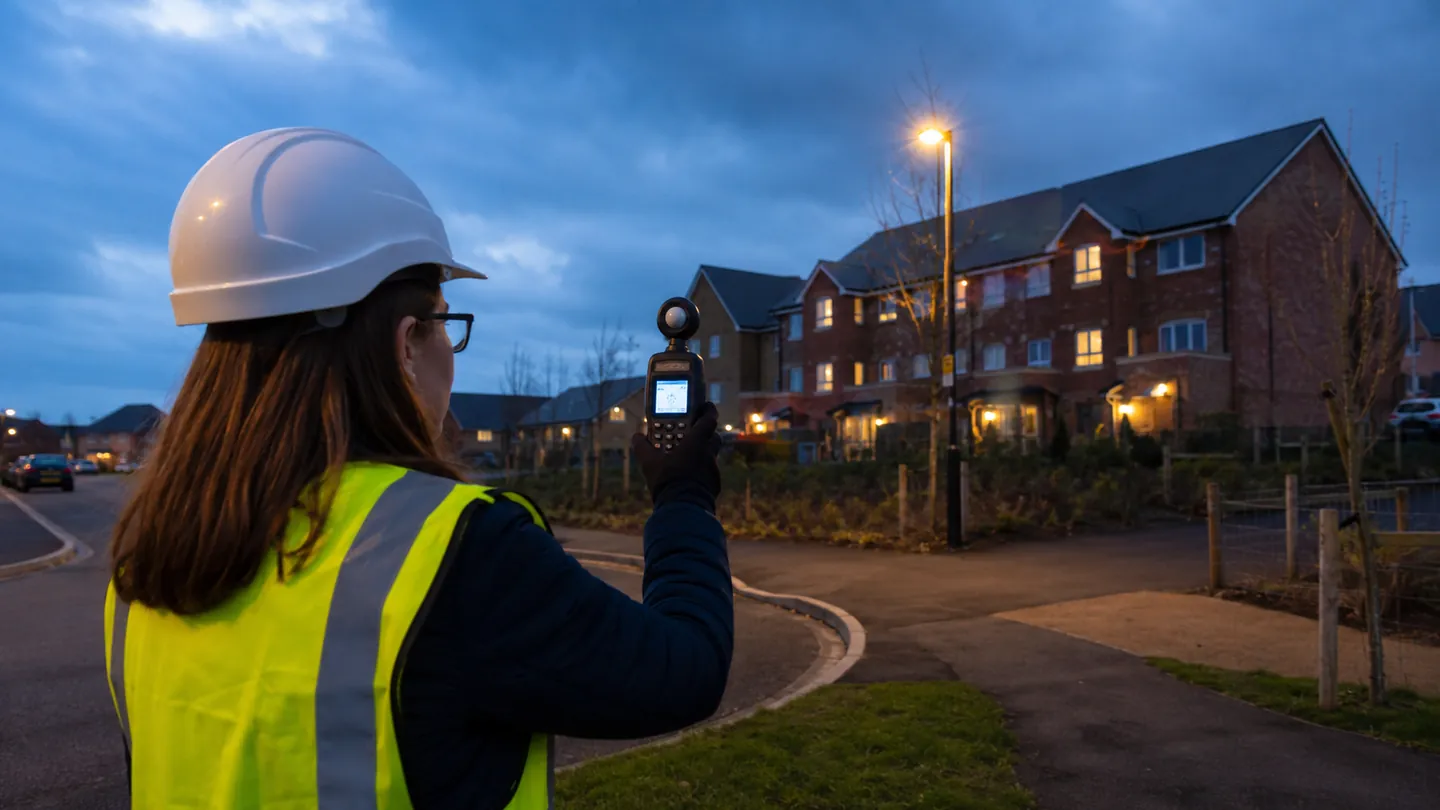
A useful lighting assessment considers source location, aiming, output, operating hours and the sensitivity of neighbouring people, habitats and highways. Layout and control strategy are often as important as luminaire choice.

Consultant measuring external lighting levels at dusk.
Lighting assessment supporting safe development while protecting nearby sensitive receptors.
What a robust scope should cover
  • Existing lighting environment and sensitive receptor locations
  • Proposed luminaires, mounting heights, orientations and operating hours
  • Predicted illuminance, spill and other relevant lighting effects
  • Ecological dark-corridor or habitat considerations where applicable
  • Residential amenity and highway-interface considerations
  • Mitigation through layout, optics, shielding, dimming or curfew controls
What the work should leave you with
  • A clear record of predicted lighting effects at relevant receptors
  • A design that can be checked against the planning requirement
  • Practical mitigation integrated into the lighting layout
  • Evidence supporting condition discharge where appropriate
Why the detail mattersLighting problems are usually easier to design out than mitigate later. Small changes to position, angle or control can avoid unnecessary spill and reduce objections.
05

Useful to know before you enquire

Send the actual lighting schedule if availableLuminaire files, mounting heights, aiming and operating hours allow a more accurate assessment than a generic layout.
Ecology may set a different constraintA scheme acceptable for residential amenity may still need adjustment to protect bat corridors or other sensitive habitats.
Hours of operation matterLate-night lighting can have a different impact from lighting used only during early evening or operational periods.
Condition wording can be very specificIf the authority has set limits or requested a particular drawing or report, upload that wording with the enquiry.
FAQ

Common questions

Can lighting be assessed before the final fittings are chosen?

A preliminary assessment can inform the design, but final calculations are strongest when the proposed luminaires, mounting heights and aiming are known.

Can a lighting assessment help with ecology conditions?

Yes, where lighting could affect sensitive habitats or species. The ecology and lighting requirements should be coordinated.

What mitigation can reduce light spill?

Options can include repositioning, lower mounting heights, improved optics, shielding, dimming, warmer spectra where appropriate and time controls.

Next

Related services

These services are often reviewed alongside Lighting Assessments depending on the site, planning context and proposed development.

Structured enquiry

Send the right information first time.

Our custom enquiry builder asks service-specific questions so we can confirm the correct scope, identify linked services and avoid unnecessary delays.

Add to enquiryView all services
Ready to send details?

Build one enquiry for this and any related services.

Submit site information, planning references and supporting documents once. We’ll review the scope and confirm what is required.

Add this service to enquiry