


Skip to content
Environmental consultancy service

PFAS

PFAS assessment helps screen and manage emerging contaminant risks associated with land, water and regulatory review.

Scope and evidence

Built around planning, development and compliance decisions.

Use this page to understand when the service is usually needed, what evidence is reviewed and what information helps us quote accurately.

  • Planning and regulator context
  • Clear deliverables and next steps
  • Linked services considered early

PFAS is a broad group of persistent chemicals. Useful assessment starts by understanding plausible historical or current sources, sensitive water pathways and the specific decision the data needs to support.

01

When this service is used

Used where emerging contaminant risk, historical land use, water sensitivity or regulatory concern may require PFAS screening or assessment.

Planning and project supportUsed where site history, fire-fighting foams, industrial processes, water sensitivity or regulatory concern creates a credible PFAS question.
Risk and programme controlTargeted scoping avoids both under-testing a credible source and ordering a large analytical suite without understanding the pathway or decision context.
02

What the report normally includes

  • PFAS risk-screening scope review
  • Potential source and receptor considerations
  • Sampling or data review recommendations
  • Regulatory context commentary
  • Clear next-step advice for land or water decisions
03

What we need from you

Providing the right information at the start helps us confirm the scope, quote accurately and avoid back-and-forth once the work is underway.

  • Site address and history if known
  • Reason for PFAS concern
  • Existing chemical or water data
  • Proposed use or disposal route
  • Regulator or client requirements
04

PFAS investigation needs a source-led strategy and suitable analytical sensitivity
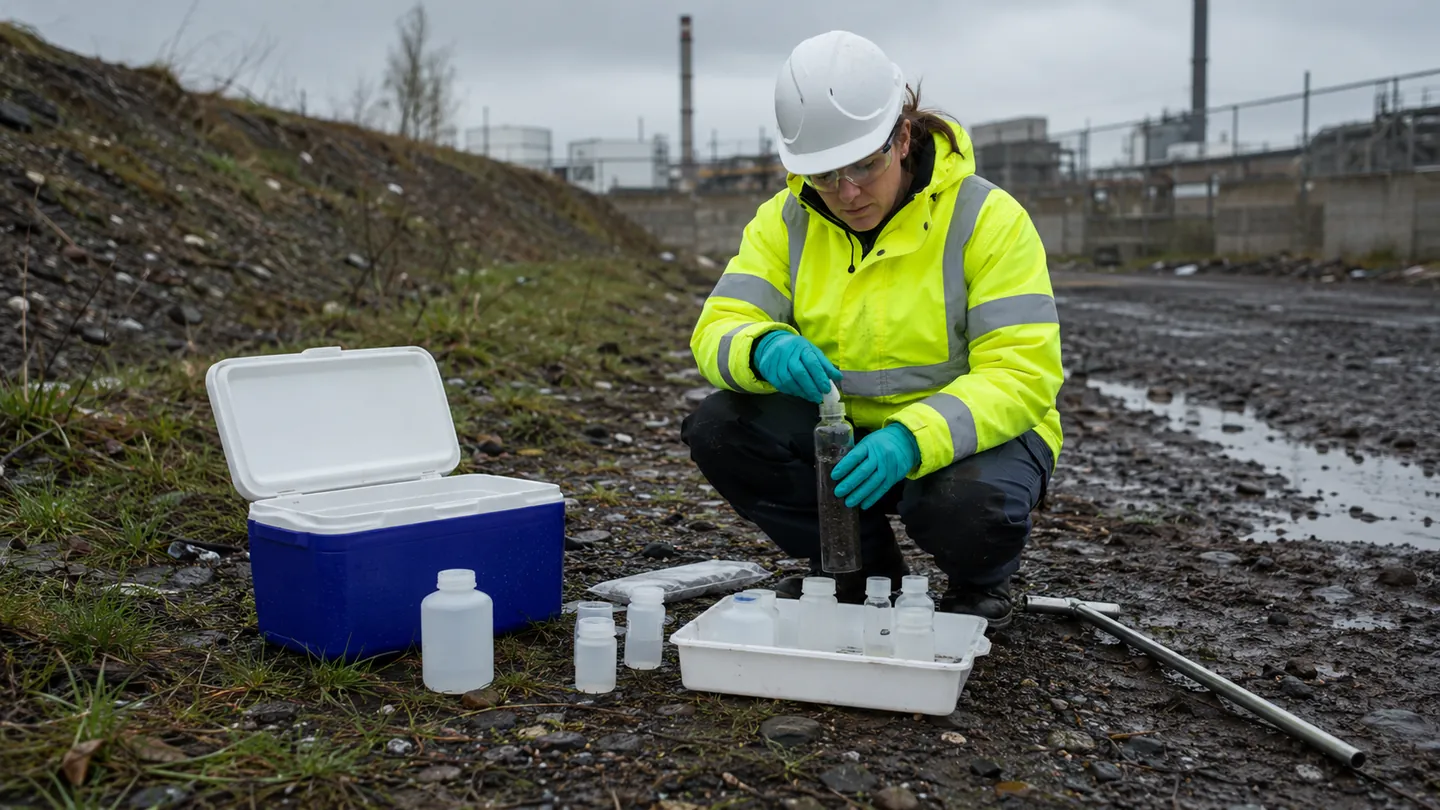
Environmental field sampling supporting a targeted PFAS assessment.
Environmental sampling supporting a targeted understanding of PFAS sources and pathways.
What a robust scope should cover
  • Potential PFAS source inventory based on site history and activities
  • Groundwater, surface-water and other sensitive receptor pathways
  • Sampling locations, media and contamination-control procedures
  • Analytical suite and reporting limits appropriate to the project objective
  • Interpretation of detections in the context of source, pathway and receptor
  • Recommendations for delineation, water assessment, management or further investigation
What the work should leave you with
  • A clearer view of whether PFAS is a credible site-specific issue
  • Data collected through a sampling strategy designed to minimise cross-contamination
  • Interpretation linked to the relevant environmental pathway
  • Proportionate next steps rather than isolated laboratory results
Why the detail mattersPFAS results can be difficult to interpret without source and pathway context. The investigation strategy should be designed before sampling so the data answers a defined question.
05

Useful to know before you enquire

Tell us why PFAS is suspectedFormer fire-training areas, foam use, certain industrial activities and other site history can help focus the source review.
Water pathways are often importantGroundwater and surface water can be key receptors and migration pathways, so hydrogeological context matters.
Sampling needs contamination controlPFAS can be present in common materials and equipment, so field procedures should minimise the risk of introducing contamination during sampling.
Existing laboratory data may still be usefulSend previous results with the method and reporting limits so we can assess whether they are suitable for the project question.
FAQ

Common questions

What site history can indicate potential PFAS risk?

Potential sources can include historic use of certain fire-fighting foams and some industrial processes, but the relevance depends on the specific site history and pathways.

Can PFAS be assessed in groundwater?

Yes. Groundwater can be an important migration pathway and receptor, and may form part of a targeted investigation where the Conceptual Site Model supports it.

Why are PFAS sampling procedures different?

Because PFAS can be present in a wide range of products and materials, sampling plans often include additional contamination-control measures to reduce the risk of false or misleading results.

Next

Related services

These services are often reviewed alongside PFAS depending on the site, planning context and proposed development.

Structured enquiry

Send the right information first time.

Our custom enquiry builder asks service-specific questions so we can confirm the correct scope, identify linked services and avoid unnecessary delays.

Add to enquiryView all services
Ready to send details?

Build one enquiry for this and any related services.

Submit site information, planning references and supporting documents once. We’ll review the scope and confirm what is required.

Add this service to enquiry