


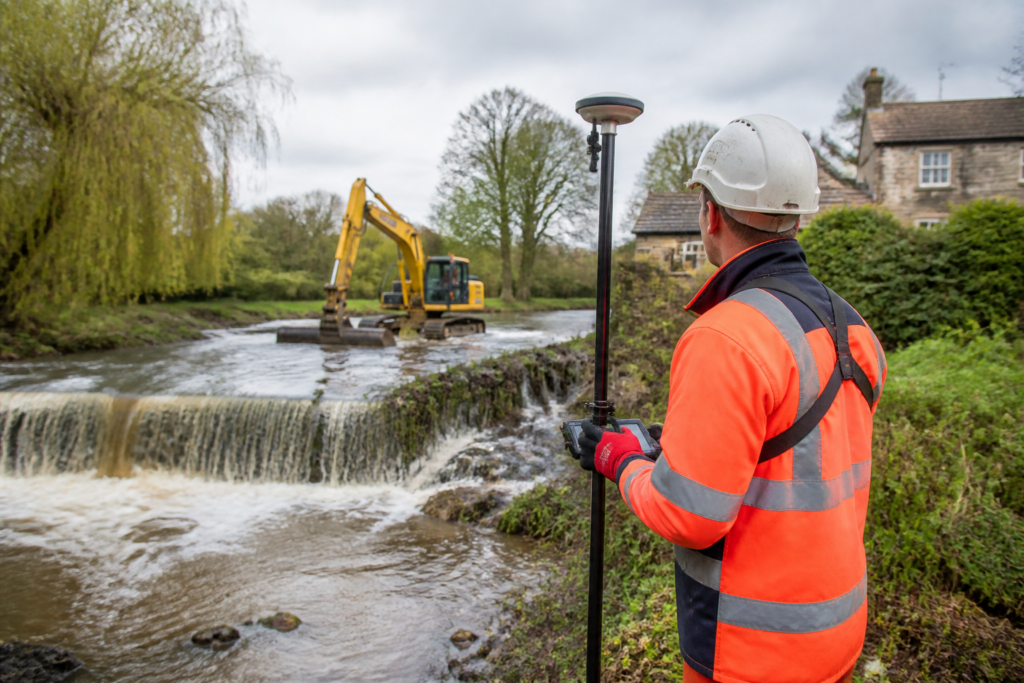
The Environment Agency updated Low risk impounding activities: RPS 302 on 22 September 2026, introducing a new advance-notification requirement for three types of watercourse work undertaken under the regulatory position statement.
The change affects projects involving the removal or partial removal of small weirs and structures up to 30 centimetres high, removal or partial removal of larger structures up to 150 centimetres high, and construction of fish passes, including eel, elver and lamprey passes. Before works begin, organisations using RPS 302 for any of these activities must now submit details through the Environment Agency’s webform.
RPS 302 applies in England and is intended for a defined range of impounding works which the Environment Agency considers low risk, provided every relevant condition is met. It can be relevant to river restoration partnerships, local authorities, internal drainage boards, landowners, charities, fisheries interests, contractors and developers delivering watercourse improvements or natural flood-management measures.
Notification is now part of the RPS route for three activities
The most immediate operational change is the new notification process. For the three specified activity types, the person relying on RPS 302 must notify the Environment Agency before starting work. The form asks the applicant to confirm that all applicable RPS requirements have been read and met, and to provide site, project and contact information.
This is not a general notification requirement for every activity listed in RPS 302. The Environment Agency states that notification is not required for the other low-risk categories covered by the statement, such as certain habitat-enhancement works, temporary works, leaky barriers, peatland restoration measures or small monitoring structures. However, all relevant general and activity-specific conditions remain applicable whether or not a notification is required.
For schemes already in development, project teams should build this step into mobilisation and construction programmes. The statement does not specify a minimum number of days between notification and commencement, but notification cannot sensibly be left until works are due to begin. Project records should demonstrate that the notification was submitted before site activity started.
What has not changed: an RPS is not a licence exemption
The update does not alter the underlying legal position on impounding licences. An impounding licence is normally required before constructing, changing or removing an impounding structure that alters water level or flow. RPS 302 instead explains when the Environment Agency would normally take a proportionate enforcement position where a project technically requires a licence but meets the statement’s tightly defined low-risk descriptions and conditions.
That distinction matters. RPS 302 does not create a statutory exemption, grant a licence, or remove the need to obtain other permissions. If a proposed activity falls outside the stated descriptions, exceeds a dimensional limit, or cannot meet every relevant condition, the Environment Agency will not regard it as a low-risk activity under the RPS and an impounding licence should be considered.
The statement also makes clear that separate controls may still apply. Depending on the location and design, these can include a flood risk activity permit for works affecting a main river, ordinary watercourse consent, permissions from an internal drainage board or navigation authority, and Natural England consent for works within a Site of Special Scientific Interest. Projects near the England-Wales border may also need early engagement with Natural Resources Wales where Welsh water users, habitats or species could be affected.
Screening and evidence remain central
The revised general conditions have been aligned with those in RPS 374, the Environment Agency’s related regulatory position for certain low-risk abstractions associated with nature recovery and fish or eel passage. The alignment reinforces a consistent risk-based approach across these water-resources statements.
In practice, organisations should not treat the new webform as a substitute for technical assessment. RPS 302 requires proponents to assess matters including effects on lawful water users, fish movement, protected sites and species, water-body status, gauging stations and third-party infrastructure. The statement says that site screening and technical assessment may be needed, and that suitably qualified professionals should be used where the promoter cannot undertake this work.
Evidence also needs to be retained. Records must be kept from the start of the impounding works for five years and made available to the Environment Agency on request. Useful project files will commonly include plans, specifications, photographs, ecological and hydrological information, stakeholder agreements, permissions and evidence supporting the RPS screening conclusions.
Additional considerations for weir removal and fish passage
The notification requirement focuses on activities where the environmental and operational consequences may extend beyond the footprint of the works. Larger weir removals under RPS 302 remain limited to structures no more than 150 centimetres high, measured from the upstream base to the crest at its lowest point. They also require written agreement from affected landowners, riparian interests, other water users and the structure owner.
Such schemes must avoid creating new barriers to fish or eel movement, undermining upstream infrastructure, affecting water-dependent habitats, mobilising harmful sediment or interfering with structures that support lawful abstraction. Works at the freshwater-tidal limit, on structures controlling flows to another watercourse, or on scheduled ancient monuments raise further restrictions or consent requirements.
New fish passes remain subject to separate Environment Agency approval. They must be constructed, operated and maintained in accordance with that written approval. RPS 302 notification is therefore an additional procedural step, rather than a replacement for fish-pass design approval.
Actions to take now
- Re-screen live projects: identify whether planned works fall within one of the three newly notified categories.
- Programme notification before mobilisation: submit the webform before any on-site work starts and retain confirmation in the project file.
- Check the complete condition set: review both general conditions and the specific requirements for the relevant activity, rather than relying only on the activity title.
- Map other consents early: establish whether flood-risk, ordinary-watercourse, designated-site, heritage, navigation or drainage approvals are required.
- Maintain an audit trail: retain assessments, drawings, agreements, approvals and before-and-after evidence for the required five-year period.
RPS 302 is currently intended to be reviewed by 25 June 2028, although the Environment Agency may amend or withdraw it earlier. Organisations using this route should therefore check the live guidance before committing to works, especially where project design or start dates move.