


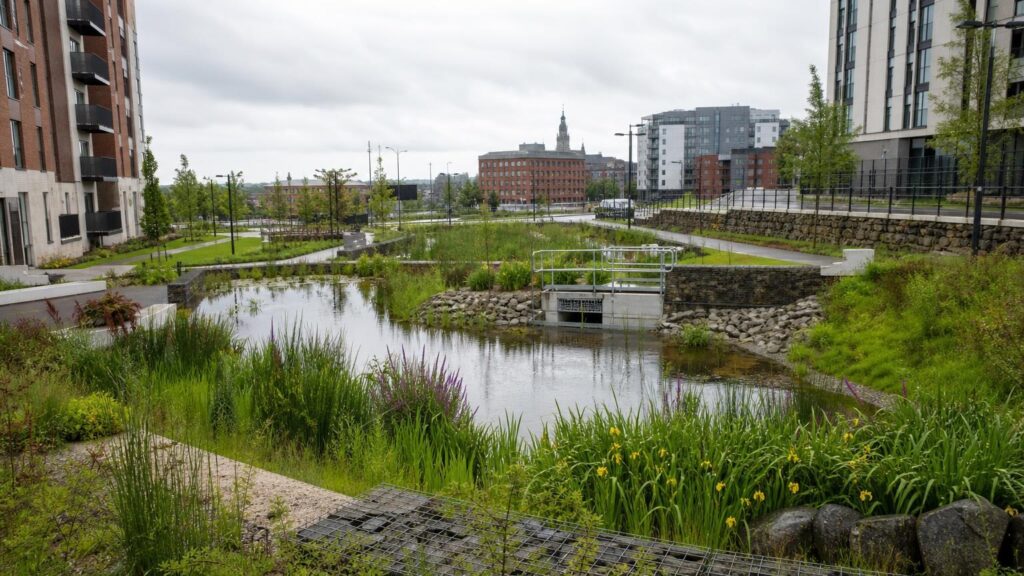
SuDS should be treated as an early design input on development in Glasgow, not a final drainage calculation. Glasgow has extensive urban drainage infrastructure and a strong need to control runoff from redevelopment. A robust strategy should show how the proposal reduces pressure on downstream systems while providing treatment, storage and safe exceedance routes.
What matters on a Glasgow site
- the interaction between redevelopment levels and existing drainage infrastructure
- opportunities for above-ground storage and treatment rather than fully piped solutions
- Scottish Water connection or adoption requirements where relevant
- contamination constraints on infiltration at former industrial or made-ground sites
The current drainage framework
In Scotland, SuDS design should be coordinated with the relevant local authority, SEPA and Scottish Water requirements where they apply. The design needs to address runoff quantity, treatment and long-term operation rather than simply provide storage.
Scottish Government National Planning Framework 4 provides the national framework; the project still needs a site-specific strategy and evidence appropriate to the proposed development.
Where infiltration testing fits
If infiltration is being relied upon, testing should be located and designed around the proposed drainage features rather than used as a generic site-wide assumption. Where previous land use or made ground could affect water quality, review the ground-risk information alongside the drainage proposal.
What to send us
Send the site boundary, proposed layout, levels or topographical survey where available, drainage concept, planning or flood-risk comments, and any previous ground investigation. We can then identify whether infiltration testing, drainage support or linked environmental work is needed.
View SuDS, drainage and flood support · View infiltration testing · Ask about a Glasgow project