


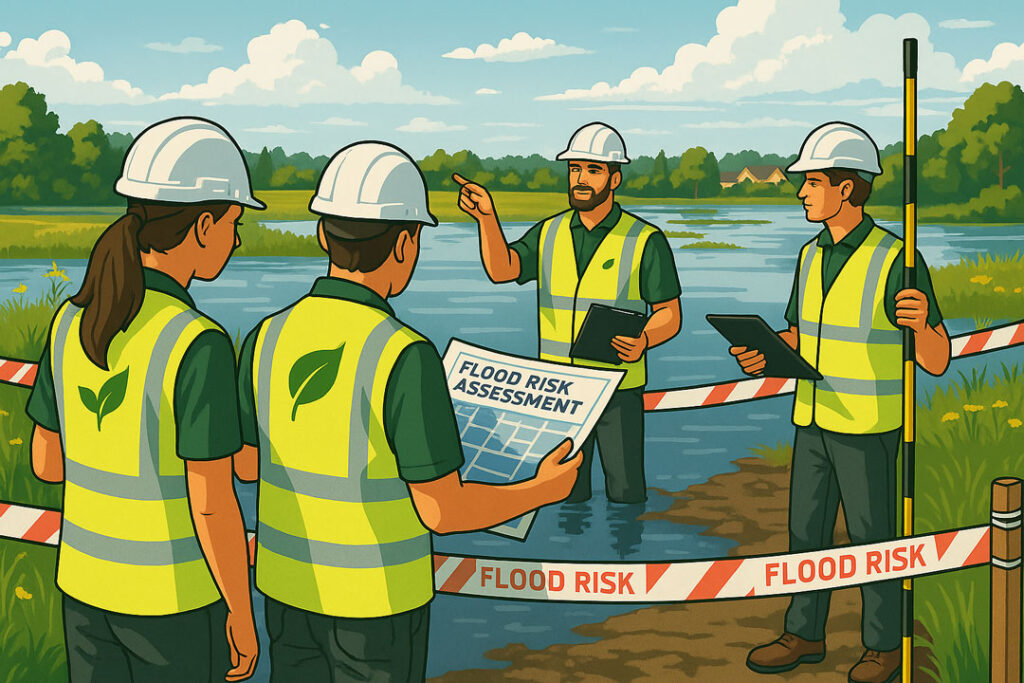
SuDS should be treated as an early design input on development in Bristol, not a final drainage calculation. Bristol projects often combine steep local topography, constrained urban sites and sensitive receiving waters. The drainage strategy should be developed alongside levels and landscape design rather than left until the planning package is nearly complete.
What matters on a Bristol site
- how site falls influence safe exceedance routing
- whether infiltration is feasible without increasing ground or slope risk
- opportunities to combine attenuation with landscape and biodiversity features
- the proposed outfall and downstream capacity where infiltration is not suitable
The current drainage framework
For development in England, the 2025 National Standards for Sustainable Drainage Systems set out a runoff hierarchy and design expectations covering flood risk, water quality, amenity and biodiversity. Local planning and flood-risk requirements still need to be addressed for the individual site.
National Standards for SuDS provides the national framework; the project still needs a site-specific strategy and evidence appropriate to the proposed development.
Where infiltration testing fits
If infiltration is being relied upon, testing should be located and designed around the proposed drainage features rather than used as a generic site-wide assumption. Where previous land use or made ground could affect water quality, review the ground-risk information alongside the drainage proposal.
What to send us
Send the site boundary, proposed layout, levels or topographical survey where available, drainage concept, planning or flood-risk comments, and any previous ground investigation. We can then identify whether infiltration testing, drainage support or linked environmental work is needed.
View SuDS, drainage and flood support · View infiltration testing · Ask about a Bristol project