


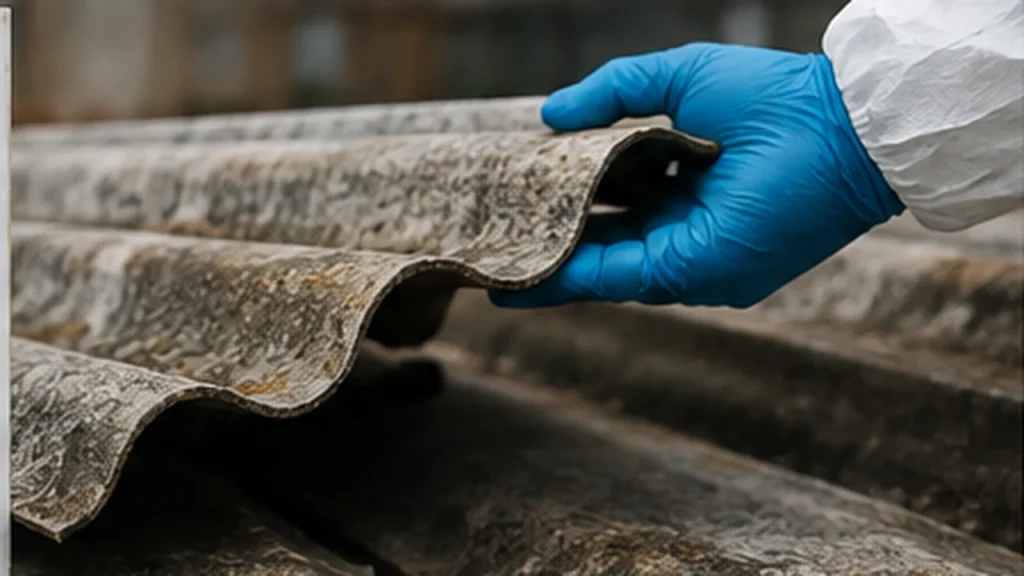
The Health and Safety Executive has completed its review of Great Britain’s asbestos control limit and confirmed that the legal control limit will remain at 0.1 fibres per millilitre (f/ml), measured as a four-hour time-weighted average.
The decision, published in May 2026, followed a review of scientific, technical and workplace evidence after the European Union moved to a lower occupational exposure limit. HSE concluded that there is currently no clear evidence that simply lowering the numerical limit in Great Britain would reduce exposure or improve health outcomes.
For dutyholders, landlords, developers and contractors, however, the most important point is what the announcement does not change. The control limit is not a target exposure level and it is not a threshold below which asbestos work can automatically be treated as safe. The Control of Asbestos Regulations 2012 still require exposure to be prevented where reasonably practicable and, where it cannot be prevented, reduced as low as reasonably practicable.
What is the asbestos control limit?
The control limit is a workplace exposure limit used within the regulatory framework for work with asbestos. In Great Britain it remains 0.1 f/ml averaged over four hours.
HSE’s review makes clear that good asbestos management depends on much more than the headline number. Competence, training, suitable control measures, site discipline and regulatory compliance all remain central to reducing exposure.
That distinction matters on refurbishment and redevelopment projects. A client should not use the control limit to decide whether a building needs an asbestos survey, whether suspect materials can be disturbed, or whether removal work is licensable. Those questions are governed by the wider requirements of the asbestos regulations and by the nature and condition of the asbestos-containing material.
Does the decision change when an asbestos survey is required?
No. The 2026 HSE decision does not remove or reduce survey duties.
A management asbestos survey is intended to locate asbestos-containing materials that could be disturbed during normal occupation and routine maintenance. Where refurbishment or demolition work will disturb the building fabric, a more intrusive refurbishment or demolition survey is normally required for the area affected by the work.
For developers acquiring or altering older commercial, industrial or public-sector property, establishing the asbestos position early is usually far cheaper than discovering suspect material after a contractor has mobilised or demolition has started.
Why HSE decided against lowering the limit
HSE said its review found no clear evidence that lowering the statutory control limit would, on its own, produce better health outcomes. It also identified practical measurement difficulties at lower concentrations and noted that a lower limit could bring substantially more asbestos work into the licensable regime without a corresponding evidence-based reduction in exposure risk.
The regulator instead emphasised effective control measures, competence and enforcement. HSE has also said it will continue to monitor emerging evidence and international developments.
What should property and development teams do?
The practical response is not to change established asbestos due-diligence processes because the numerical limit has stayed the same. Before intrusive refurbishment, demolition or significant maintenance, the project team should still establish whether asbestos-containing materials are present, define the survey scope around the proposed works and ensure that any identified materials are managed by competent parties.
Where a site is being purchased for redevelopment, asbestos information should also be considered alongside other environmental and building constraints rather than left until the construction stage.
EnviroSolution provides asbestos surveys for property management, refurbishment, demolition and development projects across the UK. If you have plans, an existing asbestos register or a proposed scope of works, send them through our enquiry builder and we can advise on the appropriate survey type.