


Built around planning, development and compliance decisions.
Use this page to understand when the service is usually needed, what evidence is reviewed and what information helps us quote accurately.
- Planning and regulator context
- Clear deliverables and next steps
- Linked services considered early
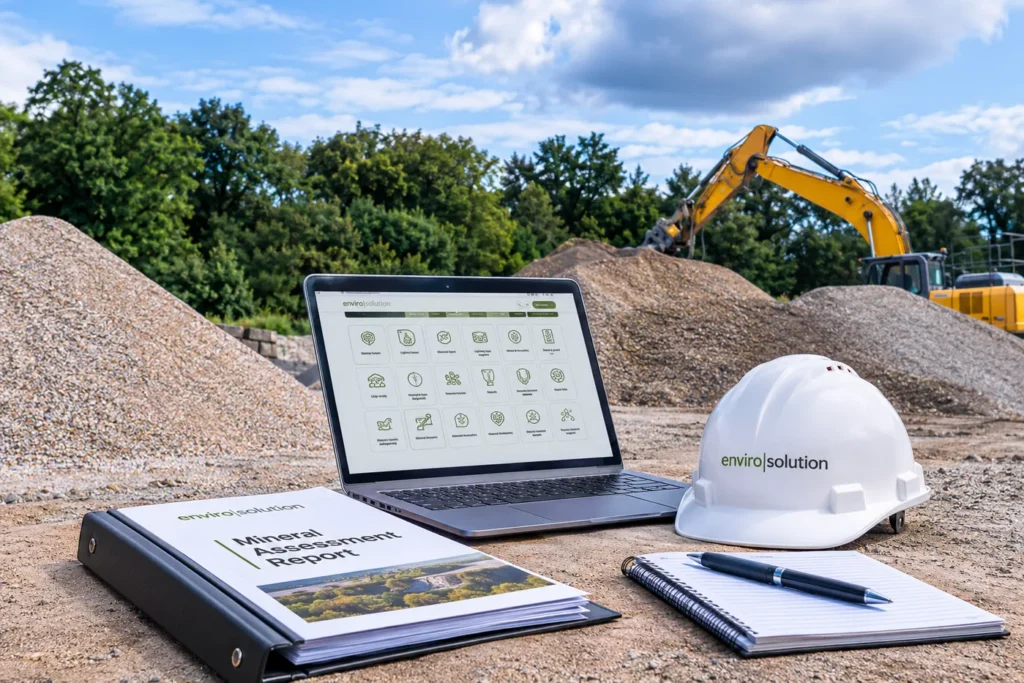
Mineral safeguarding protects the possibility of working important mineral resources in the future. A Mineral Assessment considers whether the proposed use would unnecessarily sterilise those resources and, where relevant, whether extraction before development is practical, environmentally acceptable and economically credible. The conclusion must be supported by the site evidence and applicable minerals plan.
When this service is used
Used for planning proposals in a Mineral Safeguarding Area (MSA) or Mineral Consultation Area, where the planning authority needs proportionate evidence of mineral resources, the impact of non-mineral development and whether prior extraction is realistic. This is not a Coal Mining Risk Assessment.
What the report normally includes
- Review of the planning application, minerals consultation and relevant adopted minerals policies
- Mineral Safeguarding Area and local minerals policy mapping review
- Geological, historical and existing borehole or ground-data review
- Consideration of potentially safeguarded minerals, such as sand, gravel or building stone
- Proportionate assessment of likely extent, potential quantity and resource value where evidence allows
- Review of the practicality, environmental effects and viability of prior extraction
- Assessment of potential mineral sterilisation and future access
- Reasoned planning-focused conclusions and any recommendations for further work
What we need from you
Providing the right information at the start helps us confirm the scope, quote accurately and avoid back-and-forth once the work is underway.
- Site address, location and red-line boundary plan
- Planning reference, consultation comments or condition wording if available
- Description and drawings of the proposed development
- Current and previous site uses, ownership or programme information where relevant
- Existing geological, borehole, ground investigation or minerals reports
- Local planning authority or minerals authority correspondence
Mineral safeguarding, prior extraction and planning evidence
Useful to know before you enquire
Common questions
What does mineral sterilisation mean?
It describes development that could prevent or materially constrain future extraction of a mineral deposit. Whether this matters depends on the site, proposal and mineral policy.
Will mineral resources always have to be extracted first?
No. Prior extraction depends on practical feasibility, environmental acceptability, policy and the circumstances of the development.
What information should I send first?
Site location and red-line boundary, proposed layout, the planning reference or mineral planning authority request, and any existing ground or mineral reports.
Does this cover coal mine subsidence risk?
A mineral safeguarding assessment is different from a Coal Mining Risk Assessment. A separate mining-risk review may be needed depending on the site.
Related services
These services are often reviewed alongside Mineral Assessment depending on the site, planning context and proposed development.
Send the right information first time.
Our custom enquiry builder asks service-specific questions so we can confirm the correct scope, identify linked services and avoid unnecessary delays.
Build one enquiry for this and any related services.
Submit site information, planning references and supporting documents once. We’ll review the scope and confirm what is required.