


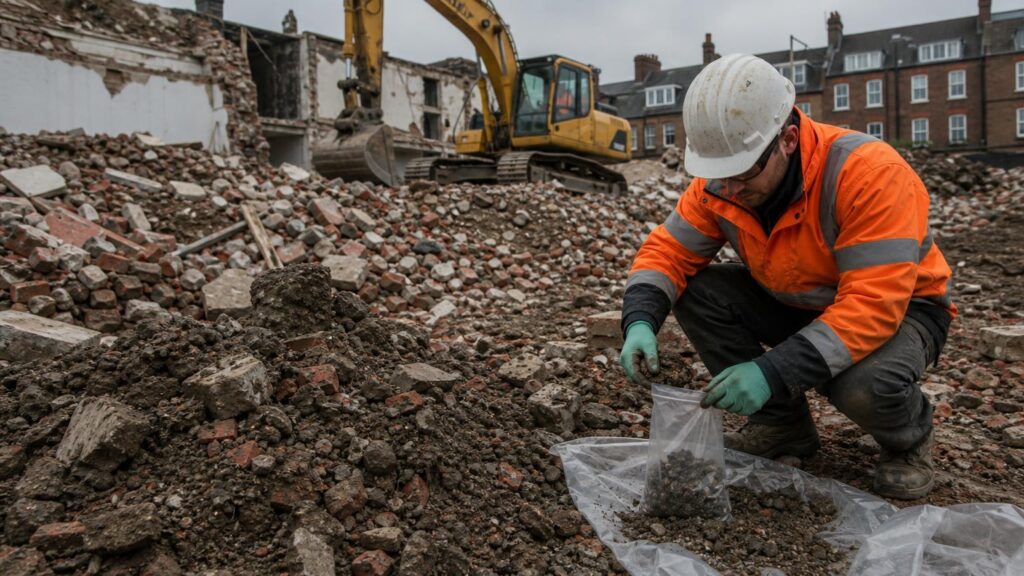
Real‑world projects rarely generate neat, single‑source soil streams. More often you are dealing with a mixture of made ground, natural soils, demolition rubble, pockets of ash or clinker and the occasional buried surprise. These mixed arisings are exactly where classification and landfill acceptance decisions become most complicated – and where targeted Waste Acceptance Criteria testing adds the most value.
Blended materials behave differently to simple natural soils. Leachate chemistry can be influenced by small proportions of high‑alkalinity or contaminated material; crushed concrete can alter pH; ash and slags can contribute soluble metals. Relying on a handful of generic test results or assumptions from a neighbouring site is unlikely to be defensible.
By planning WAC Testing specifically for mixed streams, project teams can understand how different fractions behave and whether segregation will unlock better disposal options. For example, separating relatively clean sub‑soil from demolition‑heavy made ground may allow a proportion of the material to meet inert criteria instead of consigning everything as non‑hazardous.
EnviroSolution works with contractors to map out the likely material types before excavation, agree practical segregation rules with the site team and design sampling around those stockpiles. The result is a clearer view of which materials genuinely present higher risk, and which simply sit at the benign end of the spectrum despite their mixed appearance.
WAC testing does not replace waste classification
This distinction is important on mixed demolition and earthworks projects. Waste must first be classified using the appropriate waste-classification process. Waste Acceptance Criteria testing is a separate step used to assess whether the waste meets the acceptance criteria for a proposed landfill route. Environment Agency guidance expressly separates basic characterisation and WAC from the classification decision.
That means a laboratory WAC result should not be used on its own to decide whether a waste is hazardous or non-hazardous. The project team needs the waste source, process history, chemical composition and classification evidence as well as any leaching data required by the intended receiving facility.
Mixed arisings need a representative sampling strategy
A stockpile containing natural soil, made ground, concrete fragments, ash, clinker or localised contamination may not behave as one uniform material. Sampling should reflect the actual waste streams and any visible or historical differences. Keeping materially different arisings segregated can preserve more disposal or recovery options and makes the laboratory results easier to defend.
- Define the source and origin of each waste stream.
- Separate visibly or historically different materials where practicable.
- Use representative samples for the material being characterised.
- Confirm the receiving facility’s acceptance requirements before relying on a test schedule.
- Keep the waste classification, laboratory data and disposal documentation together.
EnviroSolution can coordinate waste classification and WAC testing so the laboratory scope is tied to the intended disposal route rather than ordered as an isolated test. Current landfill guidance is available from the Environment Agency.