


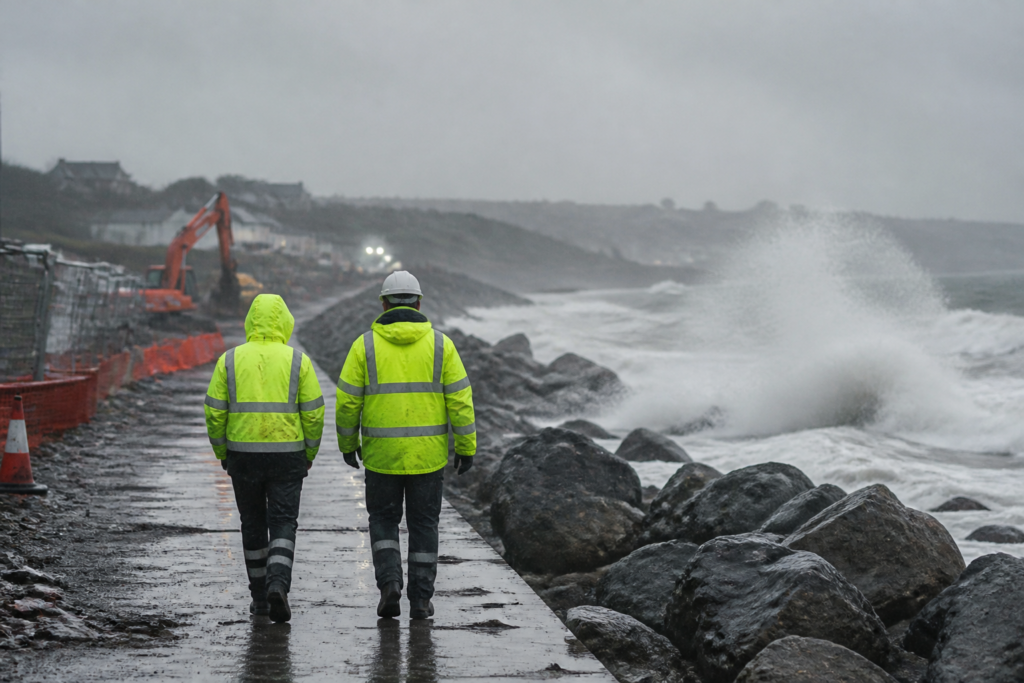
Storm Boelo has brought a sharp operational test for developers, construction teams and facilities managers across parts of the UK. The storm affected northern areas over the weekend of 24 and 25 October, combining severe winds, heavy rain, flooding risk, transport disruption and widespread electricity outages.
Sky News reported that more than 57,000 properties supplied by SP Electricity North West were without power at one point on Sunday 25 October. It also recorded 82mph winds at Tiree in the Inner Hebrides, significant flooding in western Scottish communities, and flood alerts and warnings in England. The event followed Storm Austen closely, leaving little time for recovery activities before a further period of disruptive weather.
For the built-environment sector, the immediate significance is not that a new legal regime has been introduced. None has. Rather, Boelo is a timely live example of how quickly multiple dependencies can fail together: site access, temporary drainage, power supply, communications, workforce availability and safe storage arrangements.
Wind, water and power were interconnected risks
The Met Office issued amber wind warnings covering parts of Scotland, northern England and Northern Ireland, forecasting widespread gusts of 60 to 70mph and up to 80mph at exposed coasts. It also warned of heavy rain, large waves, transport disruption, fallen trees and possible power cuts affecting other services, including mobile communications.
That combination matters for projects at every stage. On active construction sites, wind can make cranes, scaffolds, hoardings, temporary roofs, welfare units, fencing and stored materials unsafe. Heavy rain can overwhelm unfinished drainage, mobilise sediment from exposed soils and cut off haul routes. A power outage can then disable pumps, communications, access-control systems, lighting, security equipment and remote monitoring at the point they are most needed.
For operational assets, the same sequence can interrupt critical plant, basement drainage, lifts, IT systems, refrigeration, water treatment and site security. Organisations that regard flood, wind and power loss as separate emergency scenarios may find that their arrangements do not reflect the way disruption actually unfolds.
Immediate checks for construction and development sites
Project teams should use the post-storm period to inspect rather than assume that controls have remained effective. This is particularly important where works are near watercourses, coastal areas, steep ground, culverts, drainage ditches or low-lying access routes.
- Check temporary drainage and discharge routes. Clear safely accessible gullies, channels, settlement systems and silt-control measures; identify erosion, overtopping, blocked outfalls and any route by which runoff could leave the site.
- Inspect temporary works and wind-sensitive installations. A competent review should cover scaffolds, hoardings, fencing, signage, temporary roofs, cranes, stored materials and trees or branches that could affect access or structures.
- Review pollution controls. Confirm that fuel, oils, chemicals, waste containers and spill kits remain secure, accessible and above likely flood pathways. Any actual pollution incident or suspected pollution of controlled waters should be dealt with promptly through the appropriate reporting route.
- Test resilience of pumps and backup power. Check pump duty and standby arrangements, generator fuel, changeover procedures, battery backup, remote alarms and the availability of trained personnel to operate systems manually.
- Reassess safe access. Do not reopen routes merely because standing water has receded. Inspect for undermining, debris, damaged services, unstable banks, fallen trees and contamination from floodwater.
Historic Environment Agency construction guidance remains relevant on one central point: silty water can pollute watercourses and block channels or culverts, increasing local flood risk. It should not be discharged to a drain or watercourse without suitable treatment to remove suspended solids. Storm inspections should therefore extend beyond visible flooding to settlement tanks, silt traps, wheel-wash areas and stockpile runoff.
Plans need clear triggers, owners and alternatives
Boelo also reinforces the value of short, site-specific response plans that people can use under pressure. The Environment Agency’s business flood-plan guidance recommends preparing before flooding occurs, including checking local risk information, subscribing to available flood warnings and defining actions in advance.
For a construction site or managed property, the plan should identify a named decision-maker, an out-of-hours escalation route and practical triggers for action. These might include a Met Office warning, a flood alert or warning, a forecast rainfall threshold, loss of mains power, rising water at a known location, or a road closure affecting emergency access.
It should also distinguish between measures that can be taken early and those that require a stop-work or evacuation decision. Moving plant, hazardous materials, records and vulnerable equipment is far easier before routes become unsafe. In the same way, arrangements for deliveries, waste collections, security patrols and staff communications need an alternative where normal access or mobile coverage is disrupted.
What organisations should consider next
There is no universal post-Boelo reporting deadline for private organisations. However, projects should record damage, near misses, control failures and response times while evidence is fresh. This can inform construction-phase environmental management plans, emergency procedures, business-continuity arrangements and future design decisions.
Where a planning condition, environmental permit, flood-risk consent or client specification requires a construction surface-water management plan or similar document, teams should check that site practice still matches the approved or agreed arrangements. Changes to drainage layout, storage areas, dewatering, discharge points or access routes may need formal consideration rather than an informal site adjustment.
The key lesson from Storm Boelo is practical: resilience cannot rely solely on permanent finished drainage or a document prepared at pre-construction stage. It depends on maintained temporary controls, reliable warning routes, rehearsed responsibilities and the ability to operate safely when wind, water and power disruption arrive together.