


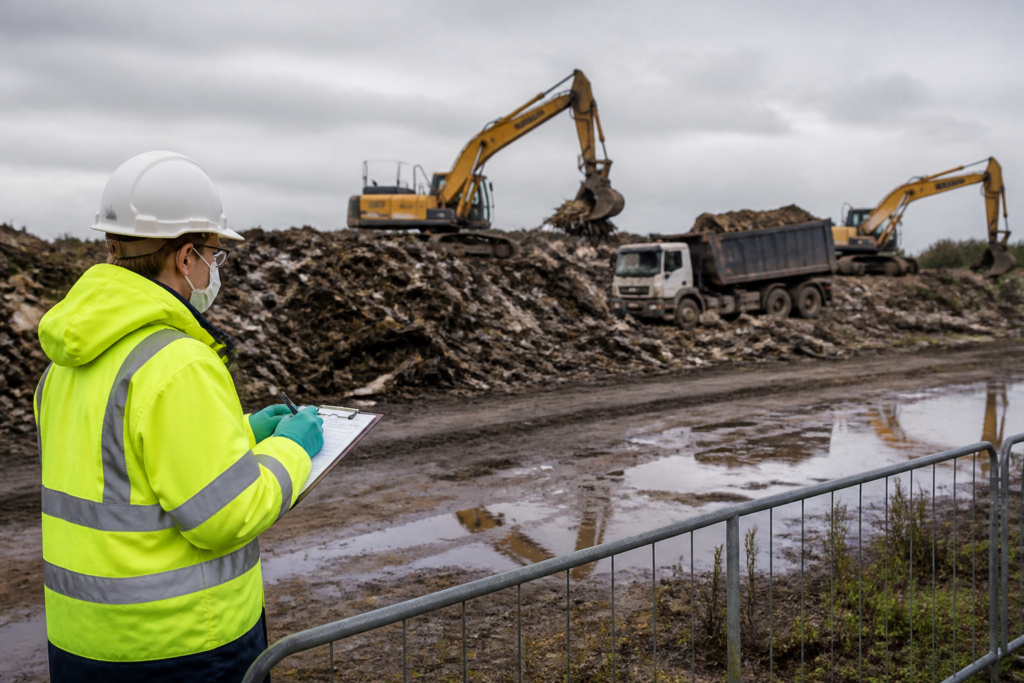
Clearance of the illegal waste site at Bolton House Road, Bickershaw, is moving from preparation into a potentially disruptive removal phase, with residents offered additional health and wellbeing support as work begins around an estimated 18,000 tonnes of waste.
Sky News reported on 4 November that people living close to the site were invited to access NHS health and blood-pressure checks, asthma reviews and mental-health support, alongside a survey asking whether their health had changed over the previous year. The support offer reflects the prolonged local impact of a site where some homes are only metres from the waste mass, rather than establishing that exposure-related illness has occurred.
The immediate change is operational. Wigan Council confirmed on 23 October that its appointed contractor, Acumen Waste Services Limited, had begun mobilisation works, including bringing equipment to the site and clearing vegetation so that waste removal could begin in the following weeks. Sky News reported that clearance was due to start during November and continue into 2027.
This is a significant transition for the local community, but it is also the point at which waste, contaminated-land, public-health and logistics risks need to be managed together. Disturbing a large, mixed and illegally deposited waste body can increase short-term risks from odour, dust, litter, pests, runoff and vehicle movements even where the eventual aim is to remove the source of those problems.
What has changed at Bolton House Road
The Bickershaw site has been subject to multi-agency management since a major fire in July 2025. Wigan Council, the Environment Agency, UK Health Security Agency, Greater Manchester Fire and Rescue Service, police, Defra and United Utilities have all been involved in addressing different elements of the incident and its aftermath.
Government funding has enabled Wigan Council to lead a procurement process for the physical clean-up. The council says its contractor selection required bidders to set out how waste would be removed safely and how the associated risks would be controlled. Preparatory work is now under way, while the Environment Agency continues a separate criminal investigation.
The enforcement case remains active. The Environment Agency announced four arrests in August 2026 in connection with suspected environmental, fraud and money-laundering offences, following an earlier arrest in May. Those arrests do not determine criminal liability; any allegations must be tested through the appropriate legal process.
Environmental-health questions remain distinct from enforcement
Public concern has been intensified by Sky News testing at the site, which identified chemical signatures including Demeton-O, p-tert-amylphenol and triisopropyl phosphate. These findings warrant careful consideration in the site risk assessment and waste-characterisation process. However, samples collected at or near the source do not by themselves demonstrate exposure at nearby homes, nor do they establish a causal link to individual health outcomes.
That distinction matters. The council’s published information says ongoing Environment Agency inspections had not identified significant off-site impacts, while acknowledging that odour can vary with weather and that residents continue to experience unpleasant smells. It also states that UKHSA is advising the partnership on potential health risks from emissions. The additional health offer should therefore be seen as a precautionary and community-support measure during a period of heightened concern and activity, not as a formal finding of widespread harm.
For residents, the practical issue is likely to be whether removal controls are visible, responsive and sustained. The council has previously indicated that waste disturbance may temporarily increase odour and that contractors will need to use odour-control and dust-suppression measures. Clear reporting routes for odour episodes, dust, litter, pests, drainage concerns and abnormal site activity will be important throughout the works.
What the clearance programme needs to control
The removal programme will require more than haulage capacity. It should operate as a managed remediation project, with controls proportionate to the nature and condition of the material being excavated.
- Waste characterisation and destination assurance: loads should be classified appropriately and sent only to suitably permitted facilities, with auditable documentation and contingency arrangements where outlets are constrained.
- Air-quality and nuisance management: dust suppression, odour controls, weather-responsive working methods, vehicle cleanliness and a clear complaints process will be central to maintaining confidence.
- Water and drainage protection: excavation can alter runoff pathways and mobilise contaminated fines. Drainage inspections, runoff controls and response arrangements should be maintained as works progress.
- Fire prevention: the 2025 fire demonstrates the need for active controls on combustible materials, hot works, site access and emergency liaison during clearance.
- Transport and neighbour impacts: routing, queue management, wheel washing, road cleanliness and safe separation from pedestrians will matter where frequent HGV movements affect a residential area.
- Verification after removal: the end of waste clearance will not necessarily be the end of environmental work. The land may need inspection, targeted ground investigation, drainage assessment and a restoration strategy before a future use can be considered.
Implications for organisations handling comparable sites
The Wigan case illustrates how quickly illegal disposal can become a long-duration environmental liability. Landowners, local authorities, waste operators, insurers, funders and developers with interests in affected land should keep the legal, environmental and reputational strands separate but coordinated.
There is no general new legal duty arising from this local clearance programme. However, organisations managing suspected illegal deposits should ensure that responsibility for the land, the waste and any associated pollution pathways is understood early; that regulators are engaged promptly; and that no removal activity begins without an appropriate waste classification, safety plan and lawful disposal route.
At Bickershaw, the next milestones are the commencement and management of physical waste removal through late 2026 and into 2027, continued resident engagement, and the eventual confirmation of what environmental verification and restoration the site will require after clearance. The quality of those controls will shape whether the clean-up provides not only visible relief, but a defensible route to long-term environmental recovery.